

The digital revolution in dentistry promised streamlined workflows, reduced waste, and enhanced accuracy. When it comes to retainer fabrication, intraoral scanning replaced messy impressions, and 3D printing eliminated outsourcing delays. Yet one step has stubbornly remained: thermoforming is still used by practices despite potential negatives such as poorer overall dimensional accuracy.[i]
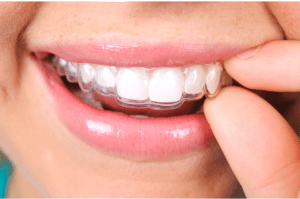
This compromise is no longer necessary. Direct 3D printing of retainers has effectively eliminated thermoforming from the workflow, allowing for the delivery of high-quality, same-appointment fabrications while removing a lot of variables that come from the more traditional methods.
A thermoforming bottleneck
Thermoforming became the orthodontic standard when vacuum-formed appliances replaced wire-and-acrylic designs. The process seemed straightforward: heat a thermoplastic sheet, drape over a model, apply pressure, cool, and trim.
In reality, thermoforming introduces multiple variables. Heating temperature affects material properties – insufficient heat creates incomplete adaptation, while excessive heat degrades the polymer. Uneven heating creates thickness variations, pressure application method influences the adaptation quality, and rapid cooling induces internal stresses that can manifest as warping. The trimming process introduces edge quality variations and risks damaging the appliance.[ii]
Significantly, thermoforming requires a physical model. Even when that model originates from digital scanning and printing, thermoforming reintroduces dimensional inaccuracies. The appliance conforms to the printed model’s surface, not the original scan data, meaning any printing inaccuracies or post-processing issues are transferred directly to the final retainer.
The cost of variables
These variables have notable consequences, like inconsistency in the thickness, which affects comfort and durability. Research shows that thermoformed retainers exhibit thickness variations[iii] that influences how the appliance sits in the mouth, and the comfort for the patient.
Fit accuracy can suffer: the retainer fits the thermoformed model, which may not perfectly represent the original scan data. Each transformation introduces dimensional drift. Studies report thermoformed appliances can exhibit discrepancies up to 0.3mm, compared to the intended position.[iv]
Waste is a further concern. Each retainer requires a full material sheet, with 60–80% discarded as trim waste,[v] while the models themselves often serve no further purpose after forming. Time investment, too: models require careful handling, machines need preheating, each appliance requires individual forming and trimming, which can undermine same-appointment promises.
Equipment maintenance adds more burden: thermoforming machines need regular servicing and parts replacement,[vi] and practices must stock multiple thicknesses of material while managing inventory and its shelf life.
The direct printing alternative
Direct 3D printing produces the finished appliance in a single manufacturing step. The digital design, whether manually or AI-generated, is translated to physical form without intermediate models or forming processes. Thickness can be precisely controlled at every point, optimising retention while minimising discomfort for the patient. Consistency between appliances improves dramatically.
Dimensional accuracy improves by eliminating this intermediate model step. The printed retainer conforms to scan data directly, without dimensional errors between the printing and forming of a model. Studies of directly printed retainers report accuracy within 0.05–0.1mm of their digital design – a marked improvement over thermoformed appliances.iii
Workflow simplification enables same-appointment delivery. All steps can occur while the patient is still in the practice, and total delivery time is reduced to under an hour in most cases.
Material efficiency is substantially improved: direct printing uses only materials required for the appliance itself – plus minimal supports – reducing waste by 40% compared to thermoforming,[vii] with corresponding cost and environmental benefits.
Workflow integration
The transition from thermoforming to direct printing requires only minimal modification to the practice workflow. Existing intraoral scanners integrate seamlessly – the same scan data previously used to print models now feeds directly into retainer design software. Practices already using 3D printers for models or guides can add retainer printing with additional materials and software alone.
AI-driven design automation particularly benefits practices without in-house CAD expertise. These systems generate printable retainer designs from scan data in minutes, accommodating various clinical requirements without manual design work. For practitioners who prefer more control, CAD software offers complete customisation.
Biocompatible retainer resins utilise similar wash-and-cure post-processing to other dental materials – practices familiar with printing night guards or aligners can therefore transition to retainer printing with a minimal learning curve.
A fully digital pathway?
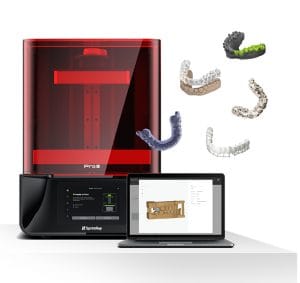
SprintRay’s Retainer resin enables practices to deliver printed retainers within a single appointment. Combined with AI-powered design through SprintRay Cloud and the Pro 2 printer’s speed, completed retainers can be delivered within approximately 15 minutes of print time. The system eliminates thermoforming entirely, while still offering everything aesthetically that patients expect. By removing the variables that inevitably come with the heating process, practices can achieve consistent results with less waste and more efficiency with SprintRay’s 3D printing solutions.
Removing thermoforming from retainer fabrication is the logical next step in a digital transformation that scanning and printing began. When every step, from data capture to finished appliance, occurs digitally, accuracy and efficiency skyrockets. Eliminating this final analogue step, for practices looking to maximise patient care and streamline workflows, makes good clinical and operational sense.

For more information on the SprintRay 3D printing solutions changing the game in dentistry, please visit https://sprintray.com/en-uk/
Author: Ross Phillips SprintRay Area Manager UK & Nordics

[i] Mechanical and geometric properties of thermoformed and 3D printed clear dental aligners
Jindal, Prashant et al. American Journal of Orthodontics and Dentofacial Orthopedics, Volume 156, Issue 5, 694 – 701
[ii] May LW, John J, Seong LG, et al. Comparison of cooling methods on denture base adaptation of rapid heat-cured acrylic using a three-dimensional superimposition technique. J Indian Prosthodont Soc. 2021;21(2):198-203. doi:10.4103/jips.jips_41_21
[iii] Oyonarte, R., Lagos, I.M., Vidaurre L., F. et al. Mechanical properties of thermoformed and direct-printed aligner materials after immersion in 37 °C water: a 14-day in vitro study. Sci Rep 16, 5864 (2026). https://doi.org/10.1038/s41598-026-36723-8
[iv] Koenig N, Choi JY, McCray J, Hayes A, Schneider P, Kim KB. Comparison of dimensional accuracy between direct-printed and thermoformed aligners. Korean J Orthod. 2022;52(4):249-257. doi:10.4041/kjod21.269
[v] Da Tan TY, Duane B, Hussein A, et al. Environmental sustainability of post-orthodontic dental retainers: a comparative life-cycle assessment of Hawley and Essix retainers. Eur J Orthod. 2024;46(2):cjae012. doi:10.1093/ejo/cjae012
[vi] Hengfeng. Thermoforming-machinery.com. Published 2022. Accessed March 6, 2026. https://www.thermoforming-machinery.com/blog/thermoformer-machine-maintenance.html
[vii] Yuan S. Best Aligner 3D Printer;3D Printer for Dental Labs. LuxCreo. Published September 19, 2025. Accessed March 6, 2026. https://luxcreo.com/best-aligner-3d-printer-for-dental-labs-production-volume-accuracy-benchmarks