

A patient returns four months after splint delivery, displaying only modest improvement. Pain has reduced, but maximum mouth opening is still too restricted for comfortable eating or yawning. They want to know how much longer until function returns. The honest answer: splint therapy alone can take 12 months or more to achieve maximum improvement in restricted opening.[i] But recent evidence suggests a faster pathway exists. Combination therapy – pairing occlusal splints with evidence-based home management – delivers earlier results and accelerated function recovery.[ii] For GDPs managing temporomandibular joint disorders (TMD) conservatively, understanding when and how to recommend this multimodal approach may significantly improve patient outcomes.

Three pathways
If a patient’s self-management of TMD fails to provide meaningful results, several options remain.
Splint therapy alone is standard,[iii] as occlusal splints reduce muscle hyperactivity, protect the dentition, and gradually improve mouth opening. The evidence is robust; for pain reduction and functional gain, splints work. However, development is slow – often slower than a patient would prefer.
Manual physiotherapy with splint therapy represents the gold standard in terms of fast and effective TMD recovery. Specialist physiotherapists combining manual techniques and progressive exercises with splint use achieve superior outcomes for pain and mouth opening than splint use alone.[iv][v] The limitation is access: TMD-trained physiotherapists remain scarce, NHS waiting lists can be long, and private treatment is costly.
Splint therapy combined with structured home stretching bridges this gap, as adding home-based exercise programmes produces earlier results than splint use alone. Patients are, therefore, able to achieve measurable gains in function without specialist physiotherapy access. Structure and routine with progressive resistance tend to deliver quantifiable results.
Why combination therapy?
Restricted mouth opening often involves a mechanical limitation that passive splint wear doesn’t directly address – stretching is often needed to restore the full range of motion.
Studies comparing splint-only versus splint-plus-exercise consistently favour combination approaches. The implications for quality of life are significant. Patients with maximum opening below 35mm report substantial difficulties, and so each millimetre gained translates to meaningful functional improvement. Device-assisted stretching has been proven to aid in patients achieving 1–2mm increases per week,[vi] which is substantially higher than splint therapy alone.
Challenges of home stretching
The traditional advice, to stretch the jaw at home several times daily with fingers,[vii] tends to suffer from poor patient compliance and inconsistent completion.[viii][ix] Patients lack professional feedback at home, force application varies unpredictably, and motivation naturally wanes. As such, successful home stretching depends on clear patient education, ongoing professional support, and regular measurement of progress.
Evidence-based home stretching requires progressive resistance, quantifiable measurement, controlled force application, and structured routines – manual finger stretching lacks these components. Device-assisted stretching addresses these limitations by providing consistent, measurable resistance with built-in progression. vi
Implementing combination therapy
An initial assessment establishes baseline maximum opening, identifies the TMD subtype, and rules out red flags. For muscle-based TMD, or disc displacement with reduction, combination therapy is appropriate first-line management.
Four weeks post introduction of both splint and home stretching, measurement of maximum opening will indicate to the practitioner the level of patient compliance. Patients responding to combination therapy typically show around 5mm of improvement by this point,vi and those plateauing may require treatment modification, or possibly specialist referral.
This approach changes conservative management from passive to active, and offers predictable and objective milestones.
Structure at home
The challenge for general dental practitioners has long been recommending specific, evidence-based home stretches without access to quality physiotherapy. Device-assisted stretches address this gap by providing the structure and progression that manual stretching lacks.
A cost comparison favours home devices substantially: a one-time device investment versus six sessions with a specialist physiotherapist. For patients facing NHS physiotherapy waiting lists or unable to afford private treatment, device-assisted home stretching offers accessibility while also delivering evidence-based, appropriate care.
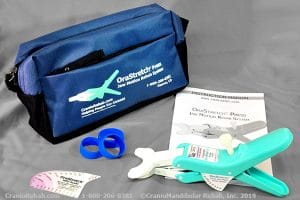 The OraStretch® Press Rehab System from Total TMJ exemplifies this approach. The device delivers controlled, progressive passive stretching with quantifiable resistance measurement. Patients perform structured protocols, often in twice daily sessions, tracking maximum opening improvement weekly. As a complement to splint therapy rather than replacement, the OraStretch® enables practitioners to offer the ideal combination of therapies without the requirement of specialist physiotherapists. Patients appreciate having something active to do to take charge of their own recovery, and practices can offer a multimodal treatment that reflects contemporary evidence.
Conservative TMD management has evolved in more recent years to combination approaches. Splints remain foundational, but adding structured home stretching delivers faster functional gains without requiring specialist referral. Device assistance provides the steady progression and objective measurement that manual stretching lacks. For patients and practitioners alike, this is a practical advancement: utilising active, measurable treatment while maintaining the accessibility and affordability of minimally invasive care.

For more details about Total TMJ and the products available, please email info@totaltmj.co.uk
Author: Karen Harnott – TotalTMJ Operations Director

[i] Akbulut, Nihat, Altan, Ahmet, Akbulut, Sibel, Atakan, Cemal, Evaluation of the 3 mm Thickness Splint Therapy on Temporomandibular Joint Disorders (TMDs), Pain Research and Management, 2018, 3756587, 7 pages, 2018. https://doi.org/10.1155/2018/3756587
[ii] Dąbkowska I, Sobiech L, Czępińska A, Bęben A, Turżańska K, Gawda P. Multimodal Approaches in the Management of Temporomandibular Disorders: A Narrative Review. J Clin Med. 2025;14(12):4326. Published 2025 Jun 17. doi:10.3390/jcm14124326
[iii] Celakil T, Saruhanoğlu A. Knowledge and Attitude Toward Temporomandibular Disorders: A Survey in İstanbul. Turk J Orthod. 2022;35(1):39-45. doi:10.5152/TurkJOrthod.2022.21170
[iv] Espí-López GV, Arnal-Gómez A, Cuerda Del Pino A, Benavent-Corai J, Serra-Añó P, Inglés M. Effect of Manual Therapy and Splint Therapy in People with Temporomandibular Disorders: A Preliminary Study. J Clin Med. 2020;9(8):2411. Published 2020 Jul 28. doi:10.3390/jcm9082411
[v] Incorvati C, Romeo A, Fabrizi A, et al. Effectiveness of physical therapy in addition to occlusal splint in myogenic temporomandibular disorders: protocol of a randomised controlled trial. BMJ Open. 2020;10(8):e038438. Published 2020 Aug 13. doi:10.1136/bmjopen-2020-038438
[vi] The ultimate treatment for trismus. Br Dent J 234, 62 (2023). https://doi.org/10.1038/s41415-022-5435-8
[vii] NHS (2024) Temporomandibular disorder (TMD), nidirect. Available at: https://www.nidirect.gov.uk/conditions/temporomandibular-disorder-tmd (Accessed: 11 February 2026).
[viii] Wänman A, Marklund S. Treatment outcome of supervised exercise, home exercise and bite splint therapy, respectively, in patients with symptomatic disc displacement with reduction: A randomised clinical trial. J Oral Rehabil. 2020;47(2):143-149. doi:10.1111/joor.12888
[ix] Bassett S. The assessment of patient adherence to physiotherapy rehabilitation. New Zealand Journal of Physiotherapy. (2003) 31. 60-66.