

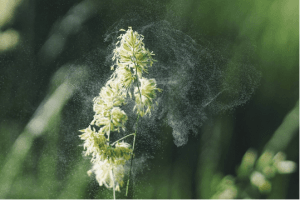
Allergic rhinitis, also known as hay fever, is triggered by rising pollen counts as seasons change and is unavoidable for a vast number of people. In the UK alone, approximately 16 million people are affected, with symptoms varying from sneezing and itchy eyes to nasal congestion, respiratory issues, and more.[i] However, despite the widespread awareness and experience of hay fever, it is rarely discussed in a dental context.

Unlike the common cold or flu, hay fever is often prolonged, with symptoms persisting and sometimes compounding – particularly throughout spring and summer. Such a prolonged period of symptoms like nasal congestion and medication use can influence an abundance of oral health factors. Most of these are overlooked, but dental professionals are in the unique position to support patients with allergic rhinitis, by encouraging healthy habits and offering tailored advice.
Mouth breathing and saliva composition
One of the most recognised and common symptoms of hay fever is nasal congestion, which leads to patients instinctively relying on mouth breathing. While this might not seem significant, the consequences for the oral cavity – particularly long-term – can be substantial.
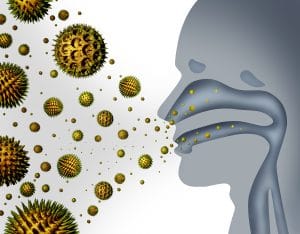
Inevitably, an increase in mouth breathing dries out the oral cavity, leading to reduced moisture in the mouth. The protective purpose of saliva – removing debris and plaque from dentition, buffering acids, and supporting remineralisation through calcium and phosphate exchange – is diminished, increasing a patient’s vulnerability to oral disease.[ii]
The effects of antihistamines
Medication is another contributing factor, as many antihistamines declare xerostomia as a side effect.[iii] The intersection between mouth breathing-induced dryness and medication-related dryness causes a compound effect on oral health.
In not knowing that the xerostomia they are experiencing is linked to medication, patients often attempt to combat it with any means possible, responding to the symptoms rather than the source. For example, patients might take throat lozenges or sip on sweetened beverages to increase salivation, without understanding the complications their actions are contributing to, such as an acid or sugar increase.
Though there are sugar-free options available for aids like lozenges, without knowing the consequences of the sugary options, patients might not actively seek a reduced sugar alternative. This makes professional dental guidance absolutely essential.
Vulnerable interdental space
The health of interdental spaces between dentition is heavily dependent on thorough mechanical cleaning – especially when saliva production is compromised and other habits are altered. Though toothbrushing is non-negotiable, alone it is insufficient for the adequate cleaning in between teeth, which combined with reduced saliva levels, accelerates the development and accumulation of plaque in interdental spaces.
This makes consistent and in-depth interdental plaque removal exceptionally important during allergy season.
Clinical guidance
The best approach to supporting patients through the oral health risks associated with hay fever is preventive – which doesn’t need to be complex. Awareness of the intersection between hay fever and oral health is important for patients, as very few will recognise the connection between the two.
Other minor adjustments can alleviate the oral consequences of nasal congestion and medication use. Dental professionals should:
- Encourage sufficient hydration
- Recommend sugar-free lozenges where required
- Emphasise toothbrushing twice a day with fluoride toothpaste
- Reinforce further layers of oral care like interdental plaque removal and alcohol-free mouth washes
Furthermore, when patients are already managing persistent allergy symptoms, overcomplicated or time-consuming oral hygiene routines are unlikely to be well-sustained. As such, tool recommendations should encourage simplicity without compromising efficiency.
Tools that truly support
 Interdental brushes, designed for purpose, are a fantastic addition to oral hygiene routines. Flexible ones can offer a thorough and controlled clean without adding excessive pressure – reaching all the spots at risk of suffering from reduced saliva levels.
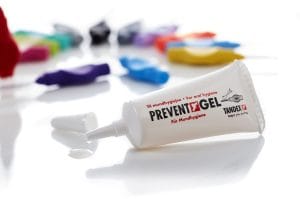
One such product is the range of TANDEX FLEXI interdental brushes, designed to take oral hygiene to the next level. Designed with a plastic-coated wire, the risk of abrasive damage and sensitivity is avoided, whilst ensuring a thorough clean. The vast range offers eleven sizes, guaranteeing a bespoke clean for every user. When used in parallel with the TANDEX PREVENT Gel – which combines fluoride (900 ppm) and chlorhexidine (0.12%) – plaque is mitigated further due to the antibacterial effect.
Preventive care and the supportive guidance
Dental professionals have the power and duty to support patients suffering from hay fever with advice, guidance on preventive care, and the right tools. Allergic rhinitis is greatly inconvenient in so many areas of day-to-day life – oral health doesn’t need to contribute to this – informed assistance can ensure that.

TANDEX is giving dental professionals the opportunity to win a FREE FLEXI Educator Kit by answering just a few questions! Enter the quiz by scanning the code or following this link https://form1.tandex.de/
For more information on Tandex’s range of products, visit https://tandex.dk/
Our products are also available from DHB Oral Healthcare https://dhb.co.uk/
Author: Jacob Watwood on behalf of Tandex – Rodericks Dental Partners Associate dentist at Fieldside Dental Practice

[i] Hay fever statistics UK 2023 (2024) Click2Pharmacy. Available at: https://click2pharmacy.co.uk/hay-fever-statistics-uk-2023/ (Accessed: 19 February 2026).
[ii] Nath, S., Zilm, P., Jamieson, L. et al. The influence of diet, saliva, and dental history on the oral microbiome in healthy, caries-free Australian adults. Sci Rep 15, 18755 (2025). https://doi.org/10.1038/s41598-025-03455-0
[iii] Talha B, Swarnkar SA. Xerostomia. [Updated 2023 Mar 24]. In: StatPearls [Internet]. Treasure Island (FL): StatPearls Publishing; 2025 Jan-. Available from: https://www.ncbi.nlm.nih.gov/books/NBK545287/