Dr Chinwe Akuonu reflects upon recent volunteering opportunities
At the start of this year, two volunteering opportunities in Nigeria and Egypt presented themselves. Although the experiences were very different, both were deeply enriching and will stay with me for a long time.
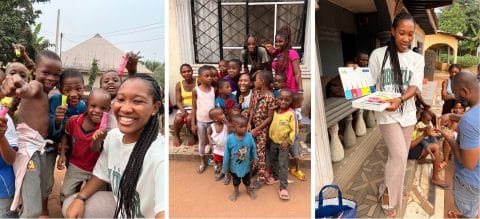
Nigeria is my country of origin, yet I had not been able to visit for over 24 years so I was excited to return and particpate in a charitable programme there. My partner kindly agreed to help with the multiple non-dental task and managing the logistics for me, as alongside my dental work this aspect would have made the project too difficult, if not impossible to accomplish.
When we arrived, the first challenge was communication; the population use more than 500 indigenous languages and my limited command of the Igbo language meant that my cousin ended up acting as our translator, which was a real godsend.
Culturally, people in Nigeria do not usually visit the dentist unless they are in severe pain or need a tooth extracted. No one can afford dental consultation, which is why prevention has the potential to make a massive difference there. I was lucky that when we were raised in Nigeria, my mum was really diligent with our oral hygiene routine, but this isn’t everyone’s experience, especially in rural areas, where dental care is so critically needed.
Although concerns about kidnapping were frequently raised, we were able to reach these rural communities safely, donate toothbrushes and toothpastes, and provide education and care. The experience was immensely gratifying: People of all ages joined in and were highly engaged and appreciative of our time.
One huge advantage we learned is that the Nigerian diet is pretty much sugar free, as chocolate and sweets are considered luxuries and are often unavailable or unaffordable. As a result, patients more commonly presented with gum inflammation, periodontitis, toothache, missing teeth, and broken teeth caused by trauma (including motorbike accidents). My main focus was therefore to explain oral hygiene in simple terms so people could understand how much prevention matters. I left Nigeria confident that with my intervention, small daily changes could shape long-term oral health habits for some of the patients I was able to see.
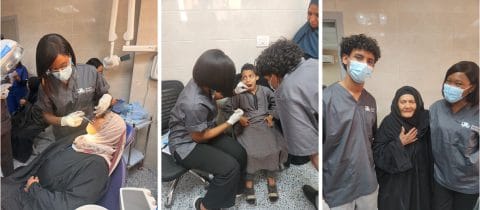
A month later, I travelled to Egypt with a UK-based charity led by an Egyptian dentist. The organisation was exceptional and made the experience both rewarding and very safe. As we worked alongside other charities and had access to a mobile dental van, so we were able to cover wider areas and help hundreds of people.
I was really taken aback by both the record numbers of cavities in children and how the country’s high sugar diet was not recognised as problematic by locals. The language barrier was of course an issue but this was exacerbated by parents’ ignorance, lack of oral hygiene education and bad habit formation (like prolonged bottle-feeding and high intake of sweet drinks during weaning).
There were only eight dentists to treat 300 patients, and the bulk of the work was extractions without X-rays. It was extremely intense to say the least. We worked with basic dental chairs and flashlights, and the long hours on my feet left me in pain every day, relying on painkillers to get through. But it was so worth it.
Compared with Nigeria, I think the prevention message we were trying to convey will be harder to translate into long-term impact in Egypt. Mind sets have to change, especially with regards to the high-sugar diet which felt like the biggest barrier in Egypt. While change is possible, realistically it will take decades to achieve. In the short term, however, we were still able to help by removing decayed teeth, carrying out extractions, and treating immediate infections.
Now back in the UK, I really appreciate – and maybe even value more – the comfort of my practice as well as the progress I can achieve with my long-term patients.
Prevention has always been my priority before any treatment begins (I guess the fact I started my career as a dental hygienist has influenced this!). Patients need to understand why prevention matters, and I achieve this through a very personalised approach. I do not just treat teeth; I spend an enormous amount of time coaching my patients, helping them build good oral health habits, and tailoring that guidance to their needs. I also make sure each care plan is developed in collaboration with my hygienist so we remain fully aligned.
Product recommendation is also essential to this personalised approach. The best products are the ones patients will use correctly and consistently, so I do not send them away to buy items at random, we instead explore options to see what can really improve their oral health. I don’t overcomplicate recommendations with too many products and too many steps; when that happens, compliance drops.
Prevention is the most cost-effective form of dentistry. When I believe a patient would benefit from a powered toothbrush, I introduce entry-level options and explain their long-term value compared with the cost of a filling, crown, or root canal treatment. Patients quickly recognise the investment when they understand it can help them avoid more complex and expensive dental care. I also ask patients to bring their toothbrushes to every appointment so I can give further guidance and help refine their technique. They respond very positively because it shows that I am fully invested in their long-term oral health, rather than just selling products.
I also like to share my own experience to make myself more relatable. I have never had a cavity, and as a dentist I have tested many products and learned what works. I have very thin gums and had a tendency to brush too hard, which led to gum recession and severe sensitivity, especially around my lower incisors. Cold drinks and acidic fruits were impossible, and brushing that area was always painful.
For a long time, I used different toothbrushes for different areas of my mouth, and the daily routine felt both ridiculous and tedious. Thankfully, the Philips Sonicare toothbrush altered that completely, as its pressure sensor was exactly what I needed: My gum recession was halted, brushing became easy and pain-free, and that experience strengthened my belief that brushing should feel pleasant, not painful. That is why, when patients have sensitivity issues or gum recession I tell them my story and recommend what I use, which really resonates with them.
I think that prevention should be about simplicity and authenticity. When patients feel your care, they become inspired and motivated. At least this is what I believe in!
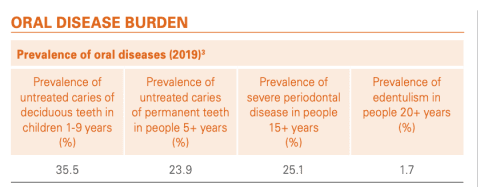
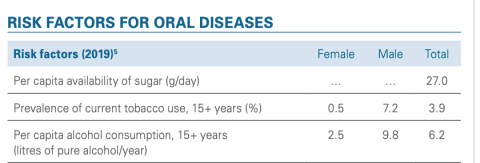
Figure 1 – Oral Disease Burden for Nigeria (Source: WHO 2019)
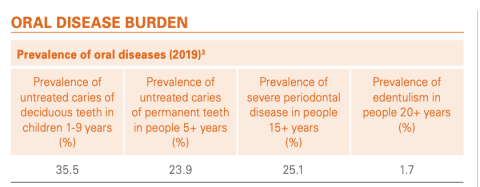
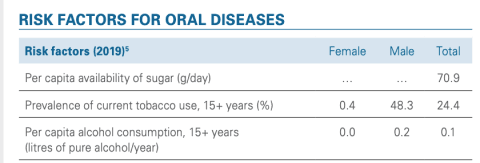
Figure 2 – Oral Disease Burden for Egypt (Source: WHO 2019)
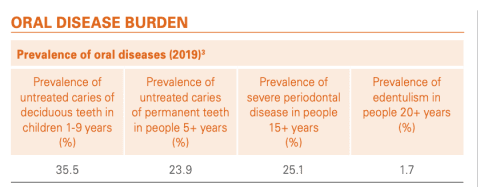
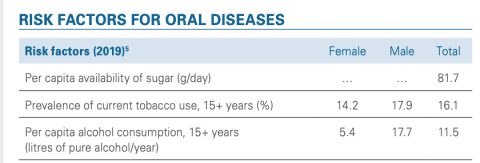
Figure 3 – Oral Disease Burden for the United Kingdom (Source: WHO 2019)
References
Nigeria
Egypt
UK