


Dental implants are widely regarded as a predictable and long-term solution for tooth replacement. Furthermore, with the vast advancements in materials, tools, surgical protocols, and technique refinement, dental implants are supported by a very high success rate.
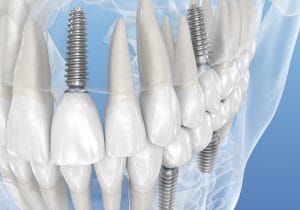
However, despite the advancements that have made dental implants easier to deliver and more durable long-term, the outcomes are not solely determined by the execution. Rather, the foundation of success is actually established well before the procedure even begins, in case selection.
Beyond technique
Remaining one of the most important, and often underestimated, aspects of implant dentistry, case selection holds a vital position in predictability of success. Though modern techniques and tools can address a range of challenges, not every patient or clinical situation will be suitable for implant treatment. For dentists, being able to assess the variables and make informed decisions at an early stage can make a substantial difference in reducing complications and improving predictability – both short- and long-term.
The evolving expectations of implant dentistry
As a result of the significant developments in implant dentistry, clinicians often rightfully approach the treatment with confidence. Meanwhile, patients are increasingly informed, with expectations shifting in parallel as they anticipate aesthetically appealing results and faster turnarounds.
Clinicians might feel pressure to fulfil these expectations, regardless of how complex the case may be, or the timeframe that the patient expects. Not every clinical situation always benefits from implant treatment; recognising it early allows for more appropriate planning and the avoidance of unnecessary complications.
Why case selection matters
The inadequate evaluation of anatomical and patient factors can compromise outcomes before treatment begins. Bone volume and morphology are central to this, as insufficient ridge dimensions can compromise the implant positioning. This can lead to biomechanical overload and subsequently limit the aesthetic outcome or the restoration integrity.[i]
Similarly, soft tissue conditions hold importance too; more specifically in the anterior region, where keratinised tissue deficiencies or unfavourable biotypes can jeopardise both stability and long-term peri-implant health.[ii]
Systemic and behavioural factors further influence the risk, both independently and in combination. For instance, poorly controlled diabetes mellitus can mean that the patient might suffer more from peri-implantitis due to the body’s healing response being slowed.[iii] Another example is patients with immunosuppressive conditions, which, again, impairs healing and osseointegration.[iv]
Smoking can impact both early integration and long-term health of implants, with various studies reporting an average implant fail rate of 6.5% to 20% – with one even finding a 140% failure risk – compared to non-smokers.[v][vi] There are many other conditions and health factors to beware of during the planning of implant treatment, making a comprehensive health history check essential, as anything unrecognised or unmanaged will add unnecessary risk to the treatment.
These considerations extend beyond biological outcomes too, as lack of meticulous care in case selection means an increased likelihood of later intervention, protracted timelines, outcomes that differ from intention, and peri-implantitis. Each of these factors impacts clinical efficiency and patient satisfaction.
Assessment and planning as a foundation for success
Comprehensive planning means the combination of assessment combined with radiographic evaluation. Cone beam computed tomography (CBCT) facilitates the accurate assessment of bone volume,[vii] as well as anatomical limits and spatial considerations to support precision in implant positioning.[viii]
Patient-related factors also play an ongoing role in implant success, meaning that expectations must be clearly established and communicated from the beginning. Maintenance requirements, the treatment timeline, and much more should be discussed in detail to support informed decision-making.
Effective case selection involves recognising and understanding when to carry out the procedure and when to delay treatment to address risks like oral hygiene or systemic factors. In more complex cases, referral might be required, as the advanced expertise can reduce any aesthetic or anatomical risks associated with the procedure.
The role of structured education in improving outcomes
The vast number of variables to account for during implant case selection means that the right level of clinical knowledge and decision-making confidence are required unwaveringly. Clinicians will always benefit from additional training to enhance their judgement and strategy – supporting practitioners in assessment, planning, and the safe completion of procedures.
Internationally renowned specialist oral surgeon, Professor Cemal Ucer, leads education programmes at the ICE Postgraduate Dental Institute and Hospital that are designed to build upon these skills. Expert teaching and deep practical insight allow delegates to develop a stronger understanding of case selection and its application in a clinical setting. The team guides delegates through evidence-based learning on not only how to treat, but when to treat, and when alternative approaches may be necessary.
For cases that still require more specialist care, Professor Ucer also provides a dental implant referral service with a host of benefits and a promise to see your patient within two weeks of receiving a referral.
Reliable implant procedures
Successful implant dentistry is built on far more than technical ability alone, but is dictated by all the decisions made prior to the procedure beginning. Careful case selection lays the foundations for the best outcomes, underpinning predictability and ultimately integral for patient satisfaction. Learning how to make these decisions will reliably take success rates and patient satisfaction further.

Please contact Professor Ucer at ucer@icedental.institute or Mel Hay at mel@mdic.co
01612 371842
 Author: Professor Cemal Ucer (BDS, MSc, PhD, Oral Surgeon, ITI Fellow
[i] Rashwan RA, AbdElkader SH, Elkersh NM, AboElhassan RG. Biomechanical behavior of immediately placed implant using bone graft and socket shield techniques: a 3D finite element analysis. Head Face Med. 2025 Aug 13;21(1):59. doi: 10.1186/s13005-025-00537-2. PMID: 40804675; PMCID: PMC12345125.
[ii] Mahardawi B, Jiaranuchart S, Damrongsirirat N, Arunjaroensuk S, Mattheos N, Somboonsavatdee A, Pimkhaokham A. The lack of keratinized mucosa as a risk factor for peri-implantitis: a systematic review and meta-analysis. Sci Rep. 2023 Mar 7;13(1):3778. doi: 10.1038/s41598-023-30890-8. PMID: 36882495; PMCID: PMC9992510.
[iii] Wagner J, Spille JH, Wiltfang J, Naujokat H. Systematic review on diabetes mellitus and dental implants: an update. Int J Implant Dent. 2022 Jan 3;8(1):1. doi: 10.1186/s40729-021-00399-8. PMID: 34978649; PMCID: PMC8724342.
[iv] Sarafidou K, Lekatsa M, Michou A, Bakopoulou A, Poulopoulos A, Andreadis D. Implant Treatment in Patients With Autoimmune Diseases: A Systematic Review and Analysis of Studies. Cureus. 2024 Aug 23;16(8):e67617. doi: 10.7759/cureus.67617. PMID: 39310633; PMCID: PMC11416833.
[v] Kasat V, Ladda R. Smoking and dental implants. J Int Soc Prev Community Dent. 2012 Jul;2(2):38-41. doi: 10.4103/2231-0762.109358. PMID: 24478965; PMCID: PMC3894084.
[vi] Mustapha AD, Salame Z, Chrcanovic BR. Smoking and Dental Implants: A Systematic Review and Meta-Analysis. Medicina (Kaunas). 2021 Dec 27;58(1):39. doi: 10.3390/medicina58010039. PMID: 35056347; PMCID: PMC8780868.
[vii] Costa ED, Peyneau PD, Ambrosano GMB, Oliveira ML. Influence of cone beam CT volume orientation on alveolar bone measurements in patients with different facial profiles. Dentomaxillofac Radiol. 2019 Sep;48(6):20180330. doi: 10.1259/dmfr.20180330. Epub 2019 Mar 28. PMID: 30864821; PMCID: PMC6747440.
[viii] Gupta J, Ali SP. Cone beam computed tomography in oral implants. Natl J Maxillofac Surg. 2013 Jan;4(1):2-6. doi: 10.4103/0975-5950.117811. PMID: 24163545; PMCID: PMC3800380.