


Cleft lip and palate is the most common congenital disorder, affecting one in 700 UK babies.[i] The condition, defined as a gap or split in the upper lip and/or the roof of the mouth, is present from birth. Whilst surgery can correct this, it can continue to impact a child’s life as they grow into adulthood.
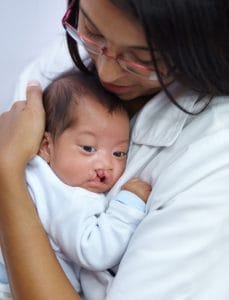
For dental practitioners, cleft lip and palate represent an enduring challenge for maintaining oral health standard in affected patients. By understanding the possible risk factors of a cleft lip and palate, the effect they can have on the patient’s oral health, and how treatment can help, dental practitioners are better prepared to manage specific cases.
Random beginnings
While developing in the womb, the embryonic facial fusion process may be unsuccessful, resulting in a complete unilateral or bilateral cleft lip and palate.[ii] A degree of randomness is involved in who this affects, but several risk factors exist. These include smoking and drinking during pregnancy, a lack of folic acid, the consumption of certain medicines and genetics – a child born to a parent who had a cleft lip and palate has a 2-8% chance of having one too.[iii] Cleft lip or palate can be picked up during the 20-week pregnancy scan, otherwise it is diagnosed after birth.
The immediate impact of a cleft lip and palate is difficulty feeding, with the gap preventing a tight seal. As such, cleft lip surgery is typically performed on infants around 3-6 months, reuniting the lip and better allowing the baby to feed. Cleft palate surgery is often performed at 6-12 months, closing the gap in the oral cavity and better supporting feeding and, later, speech. Other complications, such as hearing problems caused by a build-up of fluid in the more vulnerable ears, also hinder a child’s quality of life.iii Whilst treatment helps, it doesn’t solve many of the problems that the child will grow up facing.
Dental problems
Continual oral health maintenance is important for all children, but paediatric patients with a cleft are at a higher risk of caries and periodontitis. 71.9% of cleft lip and palate children reported caries; the disruption to the continuity of the maxillary arch and the subsequently impacted tooth structure, shape, eruption, number and maxillofacial growth leads to an accumulation of dental plaque.ii The narrower, more crowded arches increase the difficulty in accessing the teeth and gingivae to clean them. As orthodontic treatment may be required for cleft lip and palate patients when of age, continual maintenance of the oral cavity ensures that the teeth, gingivae and bone remain strong.[iv]
Drying out
Another major area for concern is xerostomia. A survey on people born with a cleft reported that 54% were regular snorers, with many sleeping in a different room to their partner.iv As such, 61% of the participants stated that they awoke with a dry mouth more than three times a week. Mouth breathing, especially for long periods at night, dries out the oral cavity, depriving the teeth and gingivae of the naturally protective powers of saliva and allowing trapped food particles and harmful bacteria to fester. This leaves the oral microbiome exposed to disease.
Impacted diet is also a cause for concern. 27% of patients born with a cleft avoid certain foods, especially hard, small or spicy options.iv This limits food choice and can also lead to a deficiency in certain vitamins or food groups. An unhealthy diet increases the risk of health complications, whilst sugary foods further damage the teeth.[v] To combat the risk of oral diseases, a consistent oral hygiene routine must be encouraged in cleft lip and palate patients from a young age, and their first dental appointment should be as early as possible.
Excellent outcomes
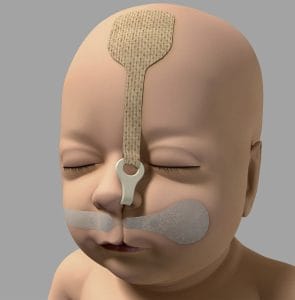
Treatment of the cleft lip and palate can improve the oral and overall health of a child. To improve surgical outcomes, consider the DynaCleft system from Total TMJ. The result of a collaboration between plastic surgeons, cleft palate teams and orthodontists, the system guides facial tissues to enhance symmetry, supporting and better positioning a cleft. Easy to use at-home, the system maximises comfort and doesn’t interfere with feeding, ensuring a smooth experience ahead of surgery.
Cleft lip and palate remain an ongoing challenge – one that is rarely spotlighted. Armed with the knowledge on how the condition affects oral health, dental practitioners can better support their patients before surgery and in the many years after.

For more details about Total TMJ and the products available, please email info@totaltmj.co.uk
 Author: Karen Harnott – Total TMJ Operations Director
[i] Cleft. (n.d.). Cleft lip and palate. [online] Available at: https://www.cleft.org.uk/pages/faqs/category/faqs.
[ii] Wu, Q., Li, Z., Zhang, Y., Peng, X. and Zhou, X. (2022). Dental caries and periodontitis risk factors in cleft lip and palate patients. Frontiers in Pediatrics, [online] 10, p.1092809. doi:https://doi.org/10.3389/fped.2022.1092809.
[iii] NHS (2019). Overview – Cleft lip and palate. [online] NHS. Available at: https://www.nhs.uk/conditions/cleft-lip-and-palate/.
[iv] CLAPA. (2014). Dental Health – Early Years (1 – 4). [online] Available at: https://www.clapa.com/treatment/early-years-1-4/dental-health/.
[v] World Health Organization (2023). Unhealthy diet. [online] World Health Organization – Regional Office for the Eastern Mediterranean. Available at: https://www.emro.who.int/noncommunicable-diseases/causes/unhealthy-diets.html.