

Pregnancy brings with it a tide of changes and health risks. Whilst research of the relationship between pregnancy and oral health has been well documented, it still feels like awareness is low among the general population. Even more so, the link between the pregnant parent and the oral health of the growing baby is elusive.
The impact of hormones on overall health during pregnancy has often focused on the altering levels of oestrogen and progesterone, especially how they change the body’s inflammatory responses. It’s because of this that gingivitis affects 30-100% of pregnant women, making the nine-month period a crucial one for dental practitioners to monitor their patients in.[i] But the reproductive hormones are not alone in impacting oral health – one further hormone to be better understood during pregnancy is cortisol, the steroid hormone that controls stress response but may also have a knock-on effect on the baby.

A big disruptor
Prenatal stress can vary in severity. Patients on the higher end of this range may increase the risk of adverse birth outcomes and alter the course of foetal neurobiological development due to the impact stress has on the body.[ii] The hypothalamic-pituitary-adrenal (HPA) axis is the central response system to stress; it activates a chain response that releases cortisol.ii This is a major disruptor to the endocrine, nervous and immune systems.
Mental health disorders including stress, anxiety and depression are the most common complications of pregnancy.[iii] Between 8-13% of women are diagnosed with anxiety or depressive orders during pregnancy, and many more already have a prior diagnosis. A vast amount of research has been focused on postpartum depression, yet 50% of these cases begin prenatally as stress levels rise, prompting a wider understanding of mental health in pregnant patients. The role of stress is therefore a major concern.[iv] Common causes of prenatal stress include mood changes, dealing with discomforts, financial problems, medical complications, and managing work tasks.iii Prenatal stress may also affect young children on an emotional and behavioural level too.[v]
Early growth
The impact that prenatal stress can have on the unborn child extends to the oral cavity, as primary tooth development begins in utero. This makes the nine-month stretch of pregnancy a sensitive window for influencing dental outcomes. A recent study focused on mothers from disadvantaged backgrounds with high prenatal levels of cortisol. It found that their children developed their primary teeth faster; earlier eruptions amounted to 25% of the focus group having developed all 20 teeth by the time they were 2. On average, the infants of mothers with the highest level of cortisol had four more teeth than the infants whose mothers had lower levels of the stress hormone.[vi]
It has been found that the hypersecretion of cortisol downregulates the osteoprotegerin axis, increasing osteoblast and osteocyte apoptosis in cortical bone. This ultimately leads to bone loss.[vii] However, high cortisol levels alter foetal growth and mineral metabolism, regulating two key components of bone and teeth development: vitamin D and calcium.
Moreover, premature eruption of the primary dentition can also be a biomarker for faster biological ageing. Because early and delayed eruption can disrupt dental alignment, contribute to malocclusion, compromise enamel quality and increase the risk of caries, it can be an early warning sign for the infant’s compromised oral development and overall health.vi As more attention will be needed for affected patients, dental practitioners should recommend frequent appointments to better monitor the growth of the dentition, as well as a reliable and consistent oral hygiene routine as the primary teeth continue to erupt, and then later fall out.
Mitigate the risks
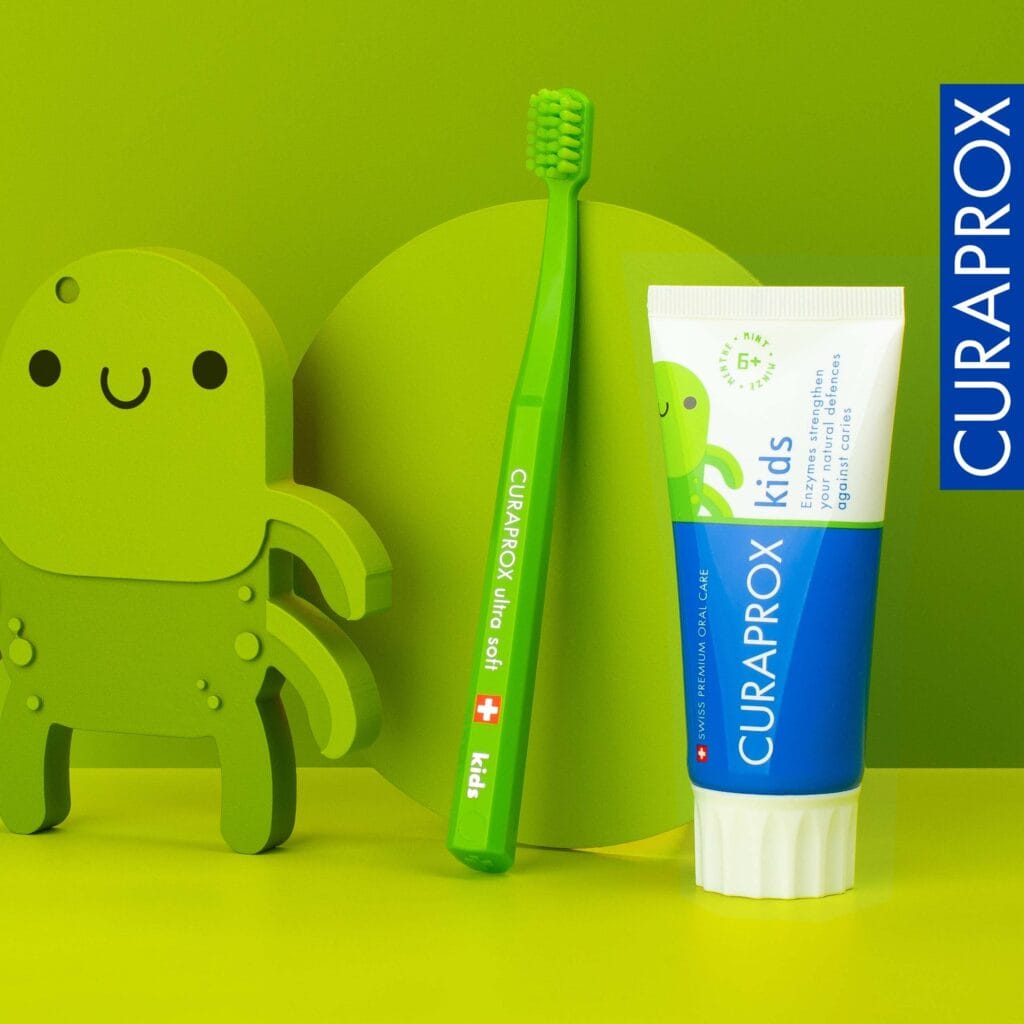
To support paediatric patients in protecting their oral health, try the Oral Health Starter Kit for Kids, from Curaprox. A magical gift set that encourages children to engage with their oral health, it contains an ultra-soft kids toothbrush and a flavoursome toothpaste to remove harmful particles and strengthen the enamel. Also included is a tooth loss chart, tooth fairy letters and envelopes, and a leaflet for toothbrushing tips – all in friendly colours to promote compliance.

It is absolutely essential that pregnant patients are educated on the added risk factors that may affect not just their own oral health, but that of their baby’s. There is no cure to stress during pregnancy, but with constant support vulnerable patients can help mitigate the risks to the health of themselves and their child.
To arrange a Practice Educational Meeting with your Curaden Development Manager please email us on sales@curaden.co.uk
For more information, please visit www.curaprox.co.uk and www.curaden.co.uk
 Andrew Turner Curaden UK Head of Marketing UK & Ireland
[i] Adeniyi, A.A., Ramachandran, S. and Jevitt, C.M. (2024). Oral Health, Anxiety, Depression, and Stress in Pregnancy: A Rapid Review of Associations and Implications for Perinatal Care. International Journal of Environmental Research and Public Health, 22(1), pp.32–32. doi:https://doi.org/10.3390/ijerph22010032.
[ii] Coussons-Read, M.E. (2013). Effects of Prenatal Stress on Pregnancy and Human development: Mechanisms and Pathways. Obstetric Medicine, 6(2), pp.52–57. doi:https://doi.org/10.1177/1753495×12473751.
[iii] Wu, Y., De Asis-Cruz, J. and Limperopoulos, C. (2024). Brain structural and functional outcomes in the offspring of women experiencing psychological distress during pregnancy. Molecular Psychiatry, [online] 29(2223–2240), pp.1–18. doi:https://doi.org/10.1038/s41380-024-02449-0.
[iv] Coussons-Read, M.E. (2013). Effects of Prenatal Stress on Pregnancy and Human development: Mechanisms and Pathways. Obstetric Medicine, 6(2), pp.52–57. doi:https://doi.org/10.1177/1753495×12473751.
[v] Lund, I.O., Hannigan, L.J., Ask, H., Askelund, A.D., Hegemann, L., Corfield, E.C., Wootton, R.E., Ahmadzadeh, Y.I., Davey Smith, G., McAdams, T.A., Ystrom, E. and Havdahl, A. (2025). Prenatal maternal stress: triangulating evidence for intrauterine exposure effects on birth and early childhood outcomes across multiple approaches. BMC Medicine, 23(1). doi:https://doi.org/10.1186/s12916-024-03834-w.
[vi] Meng, Y., Yang, R., Alomeir, N., O’Connor, T.G., Rasmussen, J.M., Bidlack, F.B. and Xiao, J. (2025). Prenatal maternal salivary hormones and timing of tooth eruption in early childhood: a prospective birth cohort study. Frontiers in Oral Health, 6. doi:https://doi.org/10.3389/froh.2025.1663817.
[vii] www.medsci.org. (n.d.). Potential mechanisms linking psychological stress to bone health. [online] Available at: https://www.medsci.org/v18p0604.htm.