


Jaw pain has a huge impact on quality of life. It can deprive patients of their favourite foods, lead to disrupted sleep, affect socialising and ultimately is associated with mental health disorders.[i] Temporomandibular joint disorder (TMD) is a complex chronic pain disorder and a common source of jaw pain, with a prevalence reportedly as high as 25%.[ii]

Because of its ability to reduce quality of life, treating TMD is a priority for patients. From making oral hygiene more difficult to altering diet, jaw immobility can have multiple repercussions on overall health if neglected. As dentists and oral surgeons trained in TMD are often the first port of call for vulnerable patients, they must be able to determine the specific treatment type needed and educate patient on the ways they can restore strength and function to the temporomandibular joint (TMJ).
Degrees of severity
As the TMJ is the hinge-like joint where the jawbone and skull meet, it can be a challenging area to treat. The symptoms of TMD – including pain around the jaw, ear and temple, headaches, and difficulty opening the mouth – can be reduced with several at-home remedies. These include:
- A soft food diet, such as soups and pasta
- Using ice packs or heat packs – whichever feels better – to ease pain
- Massaging the jaw muscles
- Finding ways to relax and avoid clenching[iii]
Whilst effective at reducing symptoms, these solutions are not permanent. Surgery may be the only option to restore full use of the TMJ. Patients may enquire about surgery in the hope of fully fixing their discomfort – but what are the treatment options and who is suitable for which?
The NHS advises TMJ surgery for patients who meet a core eligibility criterion, such as urgent treatment, reconstruction post cancer, congenital deformities, and tissue degenerative conditions that require restoring function.[iv] Patients who do not meet these criteria may seek private healthcare; dental practitioners should only recommend this if the patient is reporting consistent and intense pain, is unable to fully open or close their mouth, and has trouble eating and drinking. Any radiological scans that pick up specific structural problems or diseases in the jaw joint should also be deemed necessary of surgery.[v]
A trio of wonders
There are three main types of TMJ surgery: arthrocentesis, arthroscopy, and open joint surgery. Arthrocentesis is the most minimally invasive; it involves injecting fluid into the TMJ to wash out any chemical by-products of inflammation, reducing pressure. Delivered swiftly, patients can be home the same day and 80% will see an improvement in their TMD symptoms.[vi]
Arthroscopic treatments have longer recovery times, ranging from several days to a week. A cannula is inserted through a hole in the skin above the TMJ, allowing a camera to visualise the joint so it can be operated on with tiny surgical instruments. Arthroscopy can remove scar tissue, reshape the joint, inject medication and regulate pain and swelling.
The most severe TMD patients may need open joint surgery. For patients, this can be a daunting experience: an incision is made over the TMJ so that the joint itself can be operated on. Certain circumstances may require patients to undertake this treatment, such as an inability to reach the TMJ arthroscopically, if the joint tissue has fused with cartilage and bone, or if the jaw or TMJ disc is damaged and needs replacing.
Complications exist – injury of facial nerves, infections around the surgical site – but the results of TMJ surgery can be life-changing and long-lasting – one TMD patient made news headlines recently after receiving full jaw replacement surgery.[vii] This restored function following over a decade of locked jaw and a limited diet.
Rehab habits
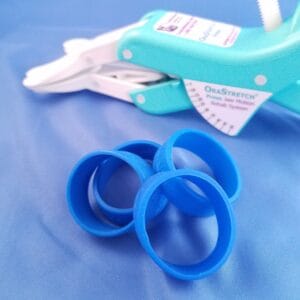 Regardless of treatment type, the rehabilitation period is essential for ensuring long-lasting outcomes. Daily therapy helps regain motion, supporting the orofacial muscles as it adjusts to the surgical outcomes of a restored TMJ. This can help with mastication – getting used to eating harder foods bit by bit – and also with oral health maintenance, enabling patients to better access the posterior teeth for optimal hygiene outcomes.
The OraStretch® Press Rehab System from Total TMJ is an essential device for TMD patients following surgery, helping to restore function and increase the range of jaw movement. Suitably sized for travel, the OraStretch® Press is simple yet effective, with versions available for children, edentulous patients, limited oral openings and over-/under-jet patients for an all-encompassing experience.
TMJ surgery can reduce chronic pain and discomfort, allowing patients to eat, speak and socialise with greater confidence and comfort. By determining the best ways to manage TMD patients, dental professionals can guide them towards a healthier and happier future.

For more details about Total TMJ and the products available, please email info@totaltmj.co.uk
 Author: Karen Harnott – Total TMJ Operations Director
[i] Wan, J., Lin, J., Tingfeng Zha, Ciruela, F., Jiang, S., Wu, Z., Fang, X., Chen, Q. and Chen, X. (2025). Temporomandibular disorders and mental health: shared etiologies and treatment approaches. The Journal of Headache and Pain, 26(1). doi:https://doi.org/10.1186/s10194-025-01985-6.
[ii] Camfield, D., Wilson, C.L. and Loescher, A. (2022). Sociodemographic trends in a UK temporomandibular joint disorder clinic. British Dental Journal, [online] pp.1–5. doi:https://doi.org/10.1038/s41415-022-3932-4.
[iii] NHS Choices (2020). Temporomandibular disorder (TMD). [online] NHS. Available at: https://www.nhs.uk/conditions/temporomandibular-disorder-tmd/.
[iv] CMICB_Clin093 -Temporomandibular joint, surgical replacement Clinical Commissioning Policy CMICB_Clin093. (n.d.). Available at: https://www.cheshireandmerseyside.nhs.uk/media/5erjec4h/pol-clin093-tmj-v1-final.pdf [Accessed 20 Nov. 2025].
[v] Jewell, T. (2019). What to Expect from TMJ Surgery. [online] Healthline. Available at: https://www.healthline.com/health/tmj-surgery#questions-for-healthcare-provider [Accessed 20 Nov. 2025].
[vi] Jewell, T. (2019). What to Expect from TMJ Surgery. [online] Healthline. Available at: https://www.healthline.com/health/tmj-surgery#questions-for-healthcare-provider [Accessed 20 Nov. 2025].
[vii] News, I. (2025). Lancashire woman recovering from locked-jaw surgery says ‘pain-free moments are surreal’. [online] ITV News. Available at: https://www.itv.com/news/granada/2025-11-12/pain-free-moments-are-surreal-woman-recovering-from-locked-jaw-surgery [Accessed 20 Nov. 2025].