

Every dental professional will know some of the challenges that could affect orthodontic care, dental implant placement, or root canal treatment. But each member of the team should be knowledgeable about the non-clinical waste challenges that are faced every day.
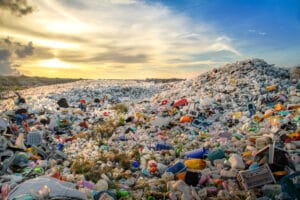
Dental waste management is a paramount aspect of daily workflows and patient safety, and clinicians should be able to confidently tackle any common problems that are encountered. In an age of climate awareness, this includes how to make the practice more environmentally friendly. Issues encountered by professionals include potential knowledge gaps, the need for infrastructural changes within the practice, and the recycling capability of the materials required in everyday care.
The growth of the dental industry, and the variety of treatments provided, has increased the volume of waste produced by the profession.[i] With this, steps must be taken to ensure it is managed in a way that best protects patients, practitioners, and the world around us.
Improving waste management knowledge
The first barrier to making any changes in the practice is the knowledge of the clinical team. Health Technical Memorandum 07-01 is the leading guidance for waste management in dental care, and professionals should have a thorough understanding of how it aids environmentally friendly workflows.[ii]
Throughout this guidance, clinicians are presented with ways to safely store waste based on the hazards presented. For example, it details the need for unique bins for amalgam waste. These should be sealable, made from a puncture-resistant material, and must contain mercury suppressants, alongside clearly defined dental amalgam labels.ii It is vital that dental professionals know this, and recognise where they can retrieve a container from, how it should be handled once full, and how to arrange its safe removal from the site. If a clinician is unsure about how to store or segregate hazardous materials, such as amalgam-contaminated waste, there is a risk of harm to patients and the clinical team, as well as the potential for the waste to be diverted to the wrong management service.
The waste workflow is designed to be uniform across every practice, as well as other healthcare services, which ensures that professionals can easily integrate into a clinical setting and manage waste with little difficulty. However, this can only happen with appropriate levels of knowledge. Practices should consider the value of continuing professional development (CPD) around the topic for all team members, as well as reviewing in-house workflows to ensure waste is handled in line with any changes to guidance.
Recycle and reuse
When thinking about waste management, recycling and reusing items is of course encouraged. It has become as important in disposal routines at home as it is in professional settings. Unfortunately, due to the nature of dental care, it is difficult to reuse many items; the literature finds that the dental profession utilises a high volume of single-use plastics that ultimately become clinical waste, requiring landfill or incineration.[iii]
The sheer amount of such products used daily in dentistry creates a difficult challenge for professionals. A 2024 research project estimated that in the previous two years, in NHS dental appointments alone, single-use plastics contributed the equivalent of 1.7 million tonnes of carbon dioxide to the waste workflow.[iv] To offset this carbon cost, the NHS would need to grow nearly 30 million seedlings for 10 years.iv
If a waste item presents a clinical hazard, it must be attributed to the correct waste stream, which can have non-environmentally friendly disposal workflows by default. Where possible, clinicians could strive
for their items to go to Energy from Waste (EfW) facilities, though this is only possible for offensive and municipal waste in HTM 07-01.ii
Investing in reusable solutions, such as specially-designed PPE, can be effective, and helps to offset the volume of waste produced by the practice. These items may be suitable for disinfection or autoclaving, depending on the manufacturer’s instructions.
Safe waste containers
An often-forgotten part of the waste produced on a daily basis comes from the waste containers themselves. Whether using specially-designed amalgam containers, or generic clinical waste bins, each will need to be disposed of after use. To counteract the environmental impact, practices can choose solutions that are made from recycled materials, or could be recycled themselves – but these should only be chosen from a trusted supplier.
Initial Medical provides a wide array of environmentally friendly waste containers to dental practices, including Griff Pac containers. These are colour-coded in line with HTM 07-01, ensuring professionals instantly recognise their use, and are made from 70% corrugated recycled plastic. Griff Pac containers can safely store clinical, infectious, anatomical and offensive waste, meeting the demands of the colour code, suiting the needs of every dental practice.
Being knowledgeable about the challenges facing dental professionals in the field of waste management is key – but recognising the potential solutions is even more important. Whether this means improving team knowledge, or changing the materials or waste containers used, the practice can be more environmentally friendly with some small changes.
To find out more, get in touch at 0808 304 7411 or visit the website today www.initial.co.uk/medical
 Author: Rebecca Waters – Rentokil Initial
About Initial Medical
Initial Medical set the standard in healthcare and infectious waste management in the UK, providing a reliable, effective and fully compliant service built around customer needs and delivered by our highly trained local teams. We are ISO 9001:2015 accredited, with technology fully integrated into our operations, providing full traceability of service delivery, electronic waste documentation and the best customer experience possible. We also offer innovative healthcare waste management services and infection control products to help break the chain of transmission and prevent cross contamination.
Initial Medical are a company with a ‘World Class’ Health and Safety record, and ISO 45001:2018 accreditation. We are also accredited to ISO 14001:2015 environmental standards and pride ourselves on our sustainable approach with a focus on delivering eco-friendly products and operational solutions.
Media enquiries:
For more information, please contact:
01227 265700
[i] Boukhris, H., Zidani, H., Khalifa, A. B., Bouslema, G., & Youssef, S. B. (2025). Environmental Impact of Dental Waste: A Survey-based Analysis of Waste Segregation and Recycling Practices in Dental Clinics. The Journal of Contemporary Dental Practice, 26(3), 250-256.
[ii] NHS England, (2022). Health Technical Memorandum 07-01: Safe and sustainable management of healthcare waste. (Online) Available at: https://www.england.nhs.uk/wp-content/uploads/2021/05/B2159iii-health-technical-memorandum-07-01.pdf [Accessed November 2025]
[iii] Martin, N., Mulligan, S., Fuzesi, P., & Hatton, P. V. (2022). Quantification of single use plastics waste generated in clinical dental practice and hospital settings. Journal of Dentistry, 118, 103948.
[iv] Hashemizadeh, A., Lyne, A., & Liddicott, M. (2024). Reducing single-use plastics in dental practice: a quality improvement project. British Dental Journal, 237(6), 483-486.