Dr Carol Somerville Roberts tackles a case of replacement veneers and whitening.

A female patient attended the practice in 2023 seeking an improvement in her smile aesthetics. Her principal concerns focused on the appearance of her upper central incisors (UL1, UR1), which were restored with porcelain veneers placed several years earlier. These veneers had chipped and the margins were visible, creating a shadowed outline that detracted from her smile. She also expressed a desire for an overall lighter tooth shade and enquired whether her lateral incisors (UL2, UR2) could be included in the enhancement to achieve better harmony.
The patient’s medical and dental histories revealed no contraindications for treatment. She was fit and healthy, with no systemic health concerns, active oral disease or TMJ issues.
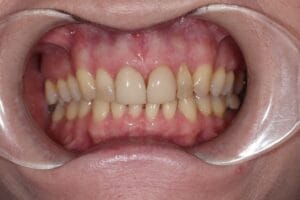
A clinical assessment was carried out. This revealed a moderately restored dentition, good oral hygiene and a low risk of caries and periodontal disease. A previous extraction of LL7 had fully healed and was asymptomatic. The existing veneers on UL1 and UR1 had chipped incisal edges and visible margins. No active caries or soft tissue pathology was found. Radiographs were taken and confirmed the absence of underlying issues. Oral cancer risk was assessed as low, and the patient was deemed dentally fit before the cosmetic dental treatment commenced.
Patient preparation
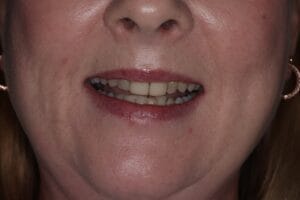
The proposed plan aimed to whiten first and restore second. This would ensure the new veneers matched the patient’s desired lighter shade. Upon agreement of this treatment, the patient was referred to the dental hygienist for professional cleaning, oral hygiene reinforcement, and risk factor management. Comfort measures included topical (Benzocaine 17.9%) or local anaesthesia (Scandonest 3% / Articaine 4%) if needed.
Home whitening was then performed. Upper and lower alginate impressions were taken for custom trays. The whitening protocol began with 16% carbamide peroxide (overnight) followed by 6% hydrogen peroxide (shorter daytime use) for controlled, gradual brightening with reduced sensitivity risk. Full instructions and maintenance advice were given. The patient displayed excellent compliancy.
Following whitening, a wax-up previewed the desired outcome with veneers. Together with the patient, it was agreed to include UL2 and UR2 to create a more balanced smile. Minimal prep veneers on these laterals would soften the dominance of the centrals and enhance symmetry.
Removal and replacement
The existing veneers on UL1 and UR1 were carefully removed. Preparations for UL2- UR2 were conservative. Retraction cords were placed for clear margins, and Luxatemp temporaries were fabricated, glazed, and adjusted for occlusion and comfort.
Shade A1 was chosen in collaboration with the patient to harmonise with the newly whitened teeth. The veneers were fabricated by PCG Dental Laboratory, Clifton, Bristol. A try-in paste was used to trial-fit the veneers and the patient was delighted and approved immediate cementation.
The veneer fitting protocol included internal veneer cleaning, hydrofluoric acid etching, phosphoric acid rinse, ultrasonic bath cleaning and silanation. For the tooth preparation, sandblasting, phosphoric acid etching and Adhese Universal application were carried out. Variolink LC resin cement was used for cementation and the excess was carefully removed, adjusting for occlusion. Optragate was used for retraction and vitamin E oil was also applied to protect the soft tissues.
Outcome and review
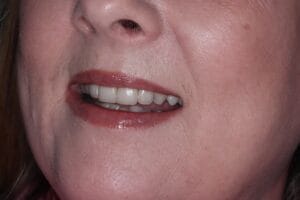
At the one-week review, the patient reported transient sensitivity when water flossing, which resolved without intervention. Examination confirmed well-adapted veneer margins and no residual cement. The shade match was integrated with surrounding dentition and the smile line was symmetrical and harmonious.
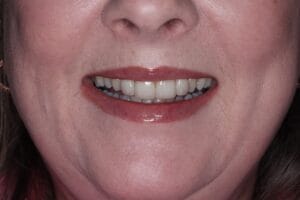
The patient expressed great satisfaction with the natural, refreshed look and the proportion achieved by treating both centrals and laterals. Updated whitening trays were provided for ongoing maintenance. A regular hygiene schedule and six-monthly reviews were planned.
By combining strategic whitening with precision veneer replacement, the treatment delivered both the brightness and the symmetry the patient desired. Careful planning, patient collaboration and meticulous execution ensured a predictable and aesthetic outcome – reaffirming the value of a phased, detail-oriented approach in cosmetic dentistry.
Bio:
Dr Carol Somerville Roberts is Founder and Clinical Director of Evolve Dentistry in Portishead, near Bristol. Renowned for her patient-centered approach and attention to detail, Dr Somerville Roberts is a dedicated member of the BACD and holds the role of President-Elect, reflecting her mission to deliver clinical excellence and invest in professional development.
For further information and enquiries about the British Academy of Cosmetic Dentistry visit www.bacd.com