


Bone loss after losing a tooth can present a significant obstacle for patients who would like dental implant treatment. This may mean that clinicians deem implants unsuitable in these cases, only presenting options such as dentures and bridges, for example. However, clinicians should consider referring these complex cases to specialist periodontists for treatment, alongside seeking out training courses to enhance their knowledge of bone and soft augmentation as a tool to facilitate dental implant placement in these cases.
Understanding bone recession
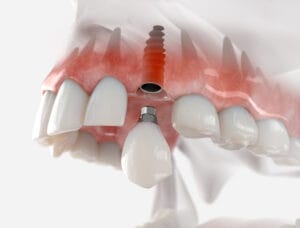
The body’s natural process of bone remodelling involves removing old bone (resorption) and replacing it where it’s needed (ossification). This, when functioning properly, is an important process for the body’s health. However, when bone is being lost at a rapid rate, bone mass decreases putting the structure at a higher risk of fracture. This process can affect the jawbone, having an impact on the health of the mouth. As such, it’s important to understand what might cause this, and how it can be managed.
Usually, the force exerted on the jawbone during chewing will send signals to osteoblasts to maintain bone strength. If a tooth is missing, whether that’s due to extraction, injury, or disease, that area of the jawbone will no longer receive stimuli, and the jawbone will break down as the rebuilding of structure is no longer a priority. Bone may still regenerate, but at a far slower rate, and dentures may exacerbate bone loss in some cases.[i]
The gold standard
Dental implants offer unique benefits. They mimic the natural appearance and function of the teeth, are a permanent solution, and can be cleaned at home in a similar way to the natural teeth. However, they can also be a useful tool for preventing bone loss that occurs after a tooth is lost. Research suggests that 30% of the alveolar ridge is lost within the first 12 weeks post-extraction,[ii] having a significant impact on oral health. Dental implants offer noticeable residual alveolar ridge preservation which varies from reducing the rate of resorption.[iii] Providing patients with a long-lasting and highly aesthetic option should be considered wherever possible, in order to deliver the best possible outcomes for patients.
Treatment of bone recession
It is for these reasons that dental implants have become an increasingly popular treatment option. As such, in patients with insufficient bone – where it may be difficult to place implants, usually – bone augmentation plays a vital role.[iv] Placing a bone graft in preparation for dental implants helps to ensure that there is optimal bone in place to support a permanent restoration long-term, for the ideal treatment outcome for the patient.
However, bone and soft tissue augmentation are advanced procedures, and it is essential that clinicians are appropriately trained and qualified to provide the treatments they offer.[v] As such, clinicians must refer patients who require this treatment type to more experienced professionals until they have received adequate training and are confident, competent, and indemnified to offer bone and soft tissue augmentation treatment to facilitate dental implant placement.
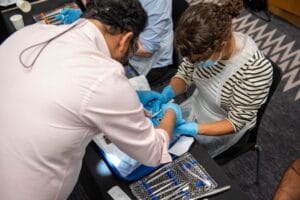
ASHA Club is an excellent option for clinicians who wish to advance their skills in hard and soft tissue augmentation. For example, Dr Selvaraj Balaji is set to deliver Comprehensive Cadaver Training in Advanced Hard and Soft Tissue Augmentation (With Sinus Grafting), offering attendees the ability to develop their knowledge and skills in a supportive environment. The three-day course consists of one day of theory (for those who have not already completed the Advanced Horizontal & Vertical Augmentation) and two days of hands-on cadaver training. Plus, those who complete ASHA Club courses are eligible for mentoring opportunities from Dr Balaji.
Bone loss can present a hurdle for some patients who would like a dental implant to replace a missing tooth. Whilst, initially, dental implants may not appear to be an appropriate option in these cases, it is important to consider the role that bone and soft tissue augmentation can play to facilitate this permanent option. It is absolutely crucial that professionals offering bone augmentation are confident and have received high-quality training to offer these solutions. Providing patients with highly functional, aesthetic, and long-lasting solutions for missing teeth can have a huge impact on their lives, building their confidence in their smile and reducing the risk of further risk due to increased bone loss.

Find out more at https://www.ashaclub.co.uk/courses
Comprehensive Cadaver Training in Advanced Hard and Soft Tissue Augmentation (With Sinus Grafting)
11th, 12th & 13th December 2025
To book, please call: 07974 304269 or email: info@ashaclub.co.uk
Author: Dr Selvaraj Balaji

[i] Gama, Andrea et al. “Bone resorption: an actor of dental and periodontal development?.” Frontiers in physiology vol. 6 319. 5 Nov. 2015, doi:10.3389/fphys.2015.00319
[ii] Lin, Hsi Kuei et al. “Prevention of Bone Resorption by HA/β-TCP + Collagen Composite after Tooth Extraction: A Case Series.” International journal of environmental research and public health vol. 16,23 4616. 21 Nov. 2019, doi:10.3390/ijerph16234616
[iii] Khalifa, Ahmed Khalifa et al. “To what extent residual alveolar ridge can be preserved by implant? A systematic review.” International journal of implant dentistry vol. 2,1 (2016): 22. doi:10.1186/s40729-016-0057-z
[iv] Dam, Van Viet et al. “Bone Augmentation for Implant Placement: Recent Advances.” International journal of dentistry vol. 2022 8900940. 27 Mar. 2022, doi:10.1155/2022/8900940
[v] GDC Standards for the Dental Team. Accessed September 2025: https://standards.gdc-uk.org/pages/principle7/principle7