

On 1st January 2025, the ban on dental amalgam use, as voted for by the European Parliament, came into effect. This came as a result of the European Commission revising the Mercury Regulation, phasing out the use of the material, as well as its manufacture and export throughout the EU, five years earlier than anticipated.[i]

Impacts across the UK were initially thought to be uneven due to Brexit agreements, which would have meant that professionals in Northern Ireland had to cease all use, whereas the rest of the UK instead had to manage potential disruption and higher costs, due to impacts on the EU supply chain. Instead, an EU derogation delayed the changes in Northern Ireland until 31st December 2034, or until the date agreed by the global Minamata Convention.[ii]
It’s important to recognise how the amalgam phase-out has affected patients, both in the UK and across the EU. It’s also vital to review the reasons for the accelerated ban, including the environmental impacts of the material.
Safety for patients
The health impacts of amalgam and its mercury properties has long been contested. The International Association for Dental, Oral, and Craniofacial Research (IADR) noted that based on available evidence, the material is safe for the general population without allergies to amalgam components or severe renal diseases;[iii] The British Dental Association (BDA) holds a similar view, stating that there is no evidence that mercury exposure from amalgam fillings has any harmful health effects, and that there is no ideal replacement material that compares with its speed and ease of placement, longevity or cost.[iv]
An individual in the UK typically absorbs around 9 millionths (0.000009) of a gram of mercury every day, and around a sixth of this comes from amalgam fillings.[v] This emphasises the minimal impact such restorations have through this route. In the UK, limitations are however placed on the treatment of pregnant or breastfeeding women, children under 15 years old, or in deciduous teeth, except for select circumstances.[vi]
Compare the alternatives
The amalgam phase-out produces the need for effective alternative materials that can fill the void left in a dental professional’s arsenal. Amalgam is, by all accounts, cost-effective and simple to place, requiring less technical skill (and therefore reducing the risk of error) and chair time when compared to dental composite.[vii]
A 2025 systematic review also reported that amalgam restorations typically have a greater longevity than composite resin restorations, with annual failure rates ranging from 0.94-9.43% for composite resin treatments, compared to 0.16-2.83% for amalgam solutions – though some studies find the failure rate is ultimately similar.[viii]
When assessing causes of failure, secondary caries has been found to be more prevalent in complex class II amalgam restorations when compared to their resin composite counterparts.[ix] This could be due to amalgam being preferred in patients with already high caries risk, rather than as a result of the material properties.
On the other hand, incidences of restoration fracture are seen to be more common in complex class II composite solutions.9 Whilst these restorative materials have improved in order to be used in posterior load-bearing teeth, fracture toughness can be compromised by water sorption, which is ultimately unavoidable in the oral cavity.9
Once again, amalgam is not yet banned in the UK. However, some have raised concerns about the effects of the phase-out on low-income patients. Amalgam has, traditionally, been a more affordable solution, and its increased longevity can also delay expenses for retreatment.7 If patients have no choice but to pay more for composite solutions, they may avoid treatment uptake, increasing the risk of dental disease.7
Safe disposal
One of the primary reasons for the amalgam phase-out is a challenge that will be encountered for quite some time yet. The mercury content within amalgam presents a risk to the environment when not properly disposed of. Its vapour is extremely toxic when inhaled.[1] When in the environment, dental mercury can convert into methylmercury, contaminating land fill and water systems, which can eventually impact food sources for fish, animals, and eventually, humans.
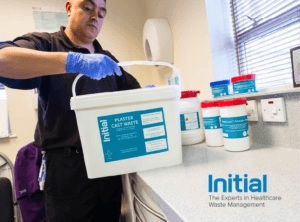
To safely manage amalgam waste, it’s therefore vital that clinicians follow Health Technical Memorandum 07-0110 and choose labelled containers with a mercury vapour suppressant, like the solutions available from Initial Medical. Their PureGuard™ Dental Container Range features a specialised suppressant, which absorbs mercury vapours, protecting your team and providing a safe storage solution for amalgam contaminated waste streams. Containers are collected by the Initial Medical team to be fully recycled at theirISO 14001:2015 (environment) certified dental recycling facility.
The amalgam phase-out does not yet apply to UK professionals, but it’s vital to keep aware of the impact on costs and how that may affect practices and their patients. Managing waste amalgam safely will continue to be essential, as restorations placed today may not be removed for decades to come.
To find out more, get in touch at 0808 304 7411 or visit the website today www.initial.co.uk/medical
 Author: Rebecca Waters Rentokil Initial
About Initial Medical
Initial Medical set the standard in healthcare and infectious waste management in the UK, providing a reliable, effective and fully compliant service built around customer needs and delivered by our highly trained local teams. We are ISO 9001:2015 accredited, with technology fully integrated into our operations, providing full traceability of service delivery, electronic waste documentation and the best customer experience possible. We also offer innovative healthcare waste management services and infection control products to help break the chain of transmission and prevent cross contamination.
Initial Medical are a company with a ‘World Class’ Health and Safety record, and ISO 45001:2018 accreditation. We are also accredited to ISO 14001:2015 environmental standards and pride ourselves on our sustainable approach with a focus on delivering eco-friendly products and operational solutions.
Media enquiries:
For more information, please contact:
01227 265700
[1] NHS England, (2022). Health Technical Memorandum 07-01: Safe and sustainable management of healthcare waste. (Online) Available at: https://www.england.nhs.uk/wp-content/uploads/2021/05/B2159iii-health-technical-memorandum-07-01.pdf [Accessed October 2025]
[i] British Dental Association, (2024). Government failure on amalgam ban could break NHS dentistry. (Online) Available at: https://www.bda.org/media-centre/government-failure-on-amalgam-ban-could-break-nhs-dentistry/ [Accessed October 2025]
[ii] Department of Health, (2024). Health Minister welcomes EU derogation for NI. (Online) Available at: https://www.health-ni.gov.uk/news/health-minister-welcomes-eu-derogation-ni [Accessed October 2025]
[iii] International Association for Dental, Oral, and Craniofacial Research, (2025). Safety of Dental Amalgam. (Online) Available at: https://www.iadr.org/science-policy/safety-dental-amalgam [Accessed October 2025]
[iv] British Dental Association, (2024). Dental Amalgam. (Online) Available at: https://www.bda.org/media/yd2ae15l/final-dental-amalgam-bda-position-paper-february-2024.pdf [Accessed October 2025]
[v] Oral Health Foundation, (N.D.). Dental amalgam policy. (Online) Available at: https://www.dentalhealth.org/dental-amalgam-policy [Accessed October 2025]
[vi] Sussex Community NHS Foundation Trust, (N.D.). Dental fillings. (Online) Available at: https://www.sussexcommunity.nhs.uk/patients-and-visitors/resources/patient-resources/dental-fillings [Accessed October 2025]
[vii] Bailey, O. (2025). The long-term oral health consequences of an amalgam phase-out. British Dental Journal, 238(8), 621-629.
[viii] Bhagwat, S., Mandke, L., Vandekar, M., Basmatkar, N., Pawar, A., & Khatri, R. (2025). Longevity of Amalgam Versus Composite Resin Restorations in Permanent Posterior Teeth: A Systematic Review. Cureus, 17(7).
[ix] Santos, M. J. M., Rêgo, H. M. C., Siddique, I., & Jessani, A. (2023). Five-Year Clinical Performance of Complex Class II Resin Composite and Amalgam Restorations—A Retrospective Study. Dentistry Journal, 11(4), 88.