Sara Hurley reflects on leadership lessons learned from the hit BBC series that had the nation hooked
 The Celebrity Traitors has been my guilty secret for the past month…
But beyond the drama and the cloaks, one moment stopped me in my tracks. When Nick Mohammed realised — too late — that he’d backed the wrong person. Disbelief written across his face, it wasn’t just great television but a masterclass in human decision-making.
That instant when logic, trust, fatigue, and emotion collide is something every leader recognises. The moment you realise that you didn’t miscalculate; you simply made a human call with imperfect information.
Leadership, like The Traitors, is never about perfect certainty; it’s about how you respond when the twist is revealed.
The chaos of decision-making
Mohammed, cerebral, kind, and methodical, had navigated the entire series with calm reasoning. He read signals, assessed risks, and built alliances with quiet intelligence. Yet, in the final 10 minutes, instinct overrode logic. A flicker of doubt seeded days earlier bloomed into conviction. He turned on his closest ally and, in doing so, lost everything.
Eleven million of us watched a brilliant mind unravel. Not through folly, but through humanity.
He later reflected, “From a mathematical point of view, it’s chaotic — you might as well be guessing.” He’s right. Leadership, whether in a castle, a clinic, or a boardroom, operates under the same conditions: limited information, distorted signals, competing incentives, and the unrelenting expectation to decide.
The myth of leadership is that good judgment means always being right. The reality is that judgment is probabilistic — shaped by context, bias, fatigue, and trust.
We make the best call possible within the constraints of time, data, and emotion. Then we live with the outcome. Because leadership isn’t a science of certainty; it’s the practice of courage, humility, and recalibration.
When doubt becomes a traitor
Mohammed’s fatal misstep was seeded in a single thought: “Maybe I’m being played.” Once doubt crept in, he began to see only what confirmed it — classic confirmation bias.
Leaders fall into the same trap. We tell ourselves stories that make sense of ambiguity. Once we’ve chosen a narrative, we defend it. That’s how bias tightens its grip — not through ignorance, but through certainty.
The discipline of leadership lies in interrogating your own conviction:
What if the opposite were true? What am I not seeing because I don’t want to?
The faithful are undone not by the traitors around them, but by the stories they tell themselves.
Integrity and intuition are not opposites
When asked why he didn’t suspect Alan Carr, Mohammed said simply: “Deep down, I just didn’t want it to be him.”
That line reveals the emotional truth of leadership. Sometimes, we hold faith in others because we need to. Logic whispers one thing; trust whispers another. We lead in relationships, not algorithms.
Trust, once given, changes the emotional calculus. Every good leader knows that some of their decisions are grounded, not in data, but in decency. Sometimes, that costs us. More often, it’s what binds teams and sustains courage when systems strain.
The producers always have another twist
Every leadership environment has its unseen producers — the structural forces shaping outcomes beyond your control. Policy, regulation, finance, politics: they rewrite the script while you’re still performing it. The trick is to play the game, but not lose yourself to it.
Herbert Simon called it “bounded rationality.” He argued that humans rarely optimise decisions — we satisfice: making the best choice possible within the limits of time, information, and emotional bandwidth.
We rarely have all the answers — so recognising the bounds of our rationality helps us:
- Accept imperfection without losing confidence
- Balance data with experience
- Build teams and systems that challenge blind spots
It’s not a soft skill; it’s an advanced one — forged through reflection, self-awareness, and feedback.
Bias, fatigue, and the quiet discipline of reflection
The Celebrity Traitors captured cognitive fatigue in real time: psychological isolation, moral tension, shifting alliances. All deliberately designed to test judgment under pressure.
Fatigue breeds error; isolation magnifies it. That’s why self-care, peer challenge, and reflection aren’t indulgences — they’re risk controls.
Heuristic leaders cultivate internal guardrails. They pause, listen, and ask, “What am I missing?” before they move.
When you’ve run out of facts — act on values
The longer I’ve served — from uniform to public health, from boardrooms to policy tables — the more convinced I’ve become that leadership is a moral, not a mathematical, exercise.
When the data ends, values take over. You act on purpose, integrity, and compassion. And when you’re wrong — as every leader sometimes will be — those same values will shape how you recover, learn, and lead again.
The moment that mattered
When the final twist was revealed, Mohammed swore, laughed, and then crumpled, recognising instantly that he’d misread everything. But in that collapse was something profoundly human — a moment of humility, grace, and, paradoxically, leadership.
Because leadership isn’t about always being right. It’s about being real when you’re wrong.
That’s why millions watched — not for betrayal, but for belief. For the courage to trust. For the faith to decide, even when the outcome is unknown.
Heuristic leadership doesn’t eliminate risk or regret. It teaches us to live with both — with courage, curiosity, and conviction intact.
That, perhaps, is the real victory — even in defeat.
 About the Author:
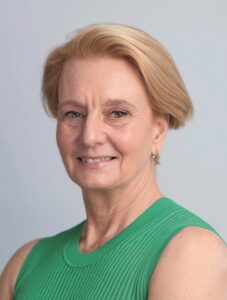
Sara Hurley CBE is a clinician and leader shaped by four decades of public service — from uniform to the NHS and beyond. A lifelong advocate for prevention-first, values-led healthcare, she remains committed to helping others lead with courage, curiosity, and conviction.
Sara is the former Chief Dental Office for England and currently chairs the University of Suffolk Dental Community Interest Company. She is also Programme Director for the Global Oral Health Leadership Programme at the International College of Dentists.