

Dr Sura Makki presents her approach to treating complex crowding and rotations in both arches with clear aligners over the course of 12 months.
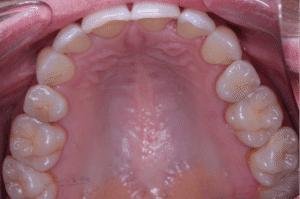
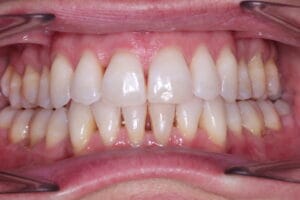
A woman, Mrs S., presented to the practice with a primary concern of dental crowding in the lower anterior region, which had led to the overlapping of teeth. This was an aesthetic issue for the patient, but also compromised the oral hygiene routine due to limited access to interdental spaces and surfaces across the dentition.
To assess whether treatment would be suitable, a complete examination of her dental health was conducted. Overall, the dental condition was excellent, with minimal bone loss and only a small amount of gingival recession. The high standard of oral hygiene was especially commendable, as gingival recession can complicate routines, and compromise effective plaque debridement for some individuals.
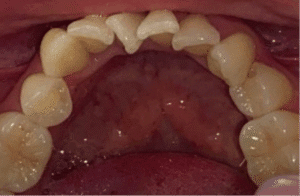
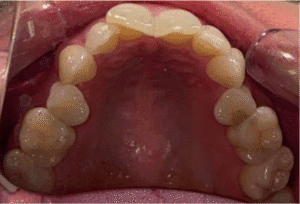
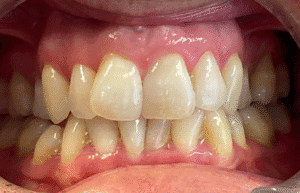
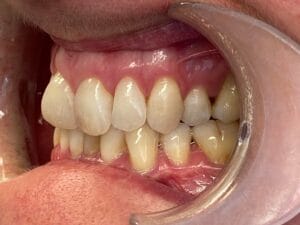
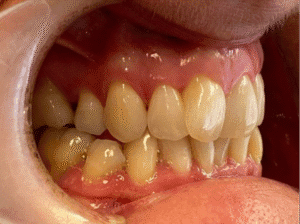
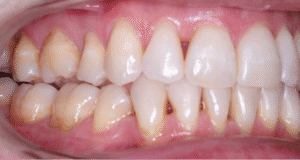
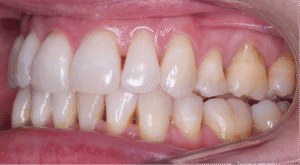
She exhibited a Class III molar relationship and a Class I incisal relationship, with severe anterior crowding and displacement. Alongside this, she had an increased overbite of approximately 4mm.
The level of crowding in the mandible had led to the rotation of the incisors. The UL1, in particular, was affected to such an extent that it was almost rotated by 90º. As expected in many orthodontic cases, the maxilla was also affected, though rotations were not observed to the same extent.
Mrs S. had undergone fixed orthodontic treatment when she was younger, which involved the removal of all first premolars. No retainer had been used, prompting relapse.
Dental health was deemed acceptable for orthodontic treatment to treat both arches, and the options available were discussed.
Treatment options
Various approaches to treatment were presented to the patient. This included no treatment and monitoring of the dentition, which was not preferred, and the use of fixed orthodontic appliances. These would help enact targeted, effective orthodontic movements. Invisalign was also discussed as an option, and was preferred due to being a discreet appearance and improved comfort – though some was to be expected. Fixed appliances were considered to be too visible, and Mrs S. was concerned that they would be painful against buccal tissue.
The removability of Invisalign also appealed, with an opportunity to complete a conventional oral hygiene routine.
After orthodontic care, the opportunity for composite bonding would become available. This was not decided upon at this point, as the patient wished to see the outcome of the orthodontic care before engaging with further treatment.
Once fully informed consent was received, treatment could begin.
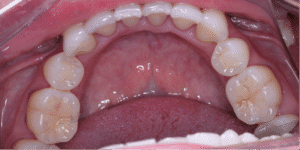
Treatment overview
Mrs S. was provided with both upper and lower clear aligners across a 12-month period. Invisalign Comprehensive was used, as this was suitable for a more complex case.
Aligners were provided regularly at consistent check-ins, which were used to assess the progression of treatment, and also monitor aspects such as oral hygiene. The patient experienced no severe issues, aside from minimal discomfort which was expected.
Interproximal reduction (IPR) of 0.5mm was performed between the UL3 and UR3 to aid the anterior crowding and to improve the overbite. This minimally invasive approach prioritises the conservation of the dentition, only enacting removal of the enamel where it is functional, aesthetic and required to create space for alignment.
To aid the reduction of the posterior open bite, vertical elastics were emplored in a ‘box’ configuration on the posterior teeth. This was the only notable challenge that had to be managed. Buttons were placed on the buccal surfaces of the premolars and molars, covering six teeth on each side, with medium strength elastics connecting these. Elastics were only needed for a couple of months, and Mrs S. experienced no significant difficulties.
The complexity of this case meant that an extended treatment time was necessary, as well as a large quantity of aligners. Throughout the year, 31 unique aligners were provided for the maxilla, and 45 aligners for the mandible.
Success was only possible with exceptional compliance and commitment from the patient, which Mrs S. displayed in abundance. The patient wore the aligners for the recommended duration and followed all oral hygiene instructions, which maximised orthodontic tooth movement and minimised the risk of problems such as caries development.
Post-treatment phase
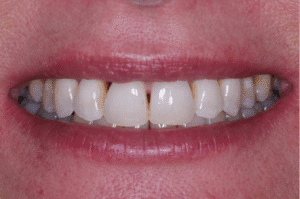
Following the successful orthodontic treatment, composite bonding was anticipated to address black triangles in the anterior region. A course of whitening treatment was performed, and following this, Mrs S. turned down the proposal of further restorative care. She preferred the natural appearance of the teeth.
The case was completed with professional airflow cleaning and scaling, further enhancing the aesthetic result.
In order to preserve results, retainers were provided to the patient at the end of treatment, with advice on how often to wear them.
Reflection
This case was a great success, and one I am proud to have completed. The patient was happy with the outcome, which always makes the case feel truly successful. Patient compliance, and a predictable approach to care, ensured results were achieved in a timely fashion.
This case also paralleled my journey through clinical photography, highlighting the impact of the IAS Photography Online Course.
The first images in this case were basic, taken without professional equipment. In contrast, the final case documentation was captured using a Canon DSLR camera with a macro lens and ring flash, significantly improving the quality and presentation of the records. The training provided a valuable enhancement to case documentation and communication.

For more information on upcoming IAS Academy training courses, please visit www.iasortho.com or call 01932 336470 (Press 1)
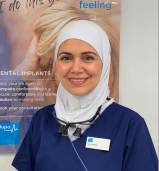 Author: Dr Sura Makki is a dentist at Wantage Oasis Dental Practice. She offers a wide range of general dentistry treatment, and has a special interest in cosmetic dentistry, implantology, periodontology and endodontics. Dr Makki has an Enhanced Skill Tier 2 in Endodontics and Periodontics 2018, and a PG Cert Aesthetic Dentistry 2015 which was earned at King’s College London, England. Dr Makki has been an Invisalign provider since 2017. In recognition of her commitment to patient care, Dr Makki was a finalist for the Treatment of Nervous Patients award at the Private Dentistry Awards in September 2024. She is a member of the British Society of Periodontology, a full member of the British Academy of Cosmetic Dentistry (BACD), and serves as a Gold Ambassador for the BACD.