


The only people able to ‘read’ a traditional radiographic or cone-beam computed tomography (CBCT) image are the likes of a trained dental professional or radiologist – until now. Clinicians can also develop insight with the help of artificial intelligence (AI) systems, which have set apart successful modern imaging solutions from their standard radiographic predecessors.
All dental professionals must recognise how to use AI effectively and responsibly. This includes the need to reflect on the literature, and guidance set by leading healthcare systems for safe patient outcomes. It also requires consideration for existing regulations, which may be subject to change as we get to grips with AI use in the modern age.
Why use AI?
AI is suited to use in diagnostic imaging because it can improve the efficacy of treatments and minimise the subjectivity of various examinations, with the potential to complete clinical tasks more accurately, with fewer professionals needed, and with fewer mistakes.[i]
Before we get carried away with AI insights, however, it’s important to note that they cannot replace professional skill. Instead, they should dovetail for improved results. One report in particular that looked at the role of radiologists in cancer detection found that supporting their abilities with AI can create the best possible outcomes[ii] – after all, there is no substitute for clinical expertise.
AI in dental imaging, at its fullest capacity, is an effective tool that supports dental professionals in their diagnostic and treatment planning processes, without ever overriding their findings. For example, different systems may identify notable aspects of a radiograph that a professional had not seen or considered; or create the basis for a treatment plan faster than a clinician could and, in turn, save time. At its worst, AI may make note of a problem that does not exist (called a hallucination), but dental professionals can dismiss this upon review, so patients are still kept safe through clinical expertise.
When AI is used to analyse and annotate radiographs, the results can be both a diagnostic aid and patient education tool. Clinicians and patients have positive perceptions towards the use of AI in this way.[iii] Dentists and dental therapists have found it helps facilitate confident diagnosis, and patients have noted that AI-produced visual aids help them understand their oral health needs.iii
AI and safer data
As dental professionals begin to think about integrating AI systems for the assessment of diagnostic images or surgical planning, it’s important to consider the regulatory framework that they are held to. The NHS presents the AI and Digital Regulations Service for health and social care, which lays out a wide range of relevant guidance and regulations for adopters of digital technology in healthcare, such as AI systems, to consider.[iv] It splits the various points into what is ‘best practice’ and what is ‘required’.
The protection of patient data is one such example of a ‘required’ element of guidance. When clinicians acquire a radiographic image of a patient’s dentition, they have immediate access to sensitive health data. Clinicians who utilise personal data are obliged to protect it and comply with data protection law,[v] and this will apply also to AI generated findings that are linked to patients in their healthcare records. This requires conversation with the developers of the AI systems that you use to ensure that processed patient data is kept safe.
The use of patient data in AI systems for personalised healthcare outcomes is seen as a benefit for patients as treatment can be better suited to their condition, and with appropriate security in place this outweighs the risk of patient data being abused through a potential hack.[vi]
Is AI the answer to your question?
An example of a ‘best practice’ guidance includes understanding if AI is the right solution to a problem. This may mean you test it against historical data to evaluate its potential impact, and recognise how its capabilities would lead to effective outcomes in the practice.[vii]
For dental professionals looking to upgrade their implant workflows, for example, this also means reviewing the literature for evidence that AI has a significant and practical impact. The literature notes that AI used for the automatic recognition and segmentation of anatomical structures are accurate, time-efficient and highly consistent.[viii] One study used just 960 2D images to train an AI model in order to predict a drilling protocol for an implant, and found it was effective[ix] – high-quality systems on the market will also produce exceptional results, but clinicians must choose these from developers they rely upon.
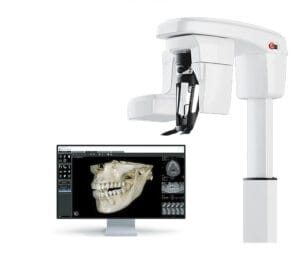
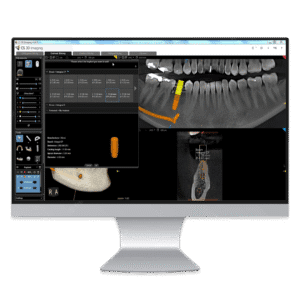
AI powered software included in the CS 8200 3D Advance Edition CBCT scanner from Carestream Dental is an effective way to introduce the future to your practice. The imaging software, available from Q3 of 2025, automates implant planning tasks with panoramic curves and nerve canal mapping, CBCT scan and intraoral scan data matching, and virtual crown design and implant placement. Alongside ensuring clinical precision, the new addition to the CS 8200 3D Advance simply makes your care smoother and faster.
Responsible implementation of AI systems into the dental practice is paramount. With a new digital set of eyes on radiographs, it’s just a matter of time for the benefits in dental care to be seen.

For more information on Carestream Dental visit www.carestreamdental.co.uk
For the latest news and updates, follow us on Facebook and Instagram @carestream
 Author: Nimisha Nariapara – Marketing Manager Carestream Dental UK, Middle East, Nordics, South Africa, Russia and CIS region
[i] Surdu, A., Budala, D. G., Luchian, I., Foia, L. G., Botnariu, G. E., & Scutariu, M. M. (2024). Using AI in Optimizing Oral and Dental Diagnoses—A Narrative Review. Diagnostics, 14(24), 2804.
[ii] Cacciamani, G. E., Sanford, D. I., Chu, T. N., Kaneko, M., Abreu, A. L. D. C., Duddalwar, V., & Gill, I. S. (2023). Is artificial intelligence replacing our radiology stars? Not yet!. European Urology Open Science, 48, 14-16.
[iii] Slashcheva, L. D., Schroeder, K., Heaton, L. J., Cheung, H. J., Prosa, B., Ferrian, N., … & Tranby, E. P. (2025). Artificial intelligence-produced radiographic enhancements in dental clinical care: provider and patient perspectives. Frontiers in Oral Health, 6, 1473877.
[iv] NHS, AI and Digital Regulations Service for health and social care, (N.D.). Regulations and guidance for adopters, All adopters’ guidance. (Online) Available at: https://www.digitalregulations.innovation.nhs.uk/regulations-and-guidance-for-adopters/all-adopters-guidance/ [Accessed June 2025]
[v] NHS, AI and Digital Regulations Service for health and social care, (N.D.). Regulations and guidance for adopters, All adopters’ guidance, Complying with the UK GDPR Steps 1-7: an introduction. (Online) Available at: https://www.digitalregulations.innovation.nhs.uk/regulations-and-guidance-for-adopters/all-adopters-guidance/complying-with-the-uk-gdpr-steps-1-7-an-introduction/ [Accessed June 2025]
[vi] Sartor, G., & Lagioia, F. (2020). The impact of the General Data Protection Regulation (GDPR) on artificial intelligence. (Online) Available at: https://www.europarl.europa.eu/RegData/etudes/STUD/2020/641530/EPRS_STU(2020)641530_EN.pdf [Accessed June 2025]
[vii] NHS, AI and Digital Regulations Service for health and social care, (2023).Regulations and guidance for adopters, All adopters’ guidance, Understanding if digital technologies or AI are the right solution to a problem. (Online) Available at: https://www.digitalregulations.innovation.nhs.uk/regulations-and-guidance-for-adopters/all-adopters-guidance/understanding-if-digital-technologies-or-ai-are-the-right-solution-to-a-problem/ [Accessed June 2025]
[viii] Macrì, M., D’Albis, V., D’Albis, G., Forte, M., Capodiferro, S., Favia, G., … & Festa, F. (2024). The role and applications of Artificial Intelligence in Dental Implant Planning: a systematic review. Bioengineering, 11(8), 778.
[ix] Sakai, T., Li, H., Shimada, T., Kita, S., Iida, M., Lee, C., … & Imazato, S. (2023). Development of artificial intelligence model for supporting implant drilling protocol decision making. Journal of prosthodontic research, 67(3), 360-365.