


A chipped tooth can seem minor in comparison to other dental predicaments. However, for patients falling victim to such an injury, particularly when involving visible anterior teeth, an injury can feel like a crisis. Chipping a tooth can be caused by a plethora of incidents: falling, sporting injuries, or merely accidental; the consequential trauma caused can often be both dental and emotional.
Patients regularly seek dental support, feeling distressed, self-conscious, and growingly anxious about the future of their smile. Dental clinicians play an important role in alleviating those anxieties, restoring confidence by improving both the strength and appearance of the damaged tooth. With revolutionary materials, dental clinicians now have the ability to return patients’ smiles to their original aesthetic easier, faster, and more effectively than ever.
Common patients
Tooth chipping can happen to anybody. However, certain individuals and groups are more susceptible to accidents leading to such injuries. Children and younger individuals are prone to chipping teeth due to their energetic, active lifestyles, lower risk-awareness, and lack of coordination.[i] Others at greater risk are older adults, and those with medical conditions like epilepsy, who face greater threat of falling due to a seizure or age-related accidents respectively.[ii]
Young adults experience several events that lead to a chipped tooth, such as partying and sporting activities. Contact sports increase the likelihood of oral injury – studies indicate that up to 39% of dental injuries in adolescents are sport-related.[iii] Preventative measures are effective, using protection like head gear and gumshields, following dietary advice, and attending regular dental check-ups.[iv]
The importance of early intervention cannot be understated for all patients affected. Leaving a tooth chipped or cracked – even if only a minor chip – can augment problems further and cause decay and sensitivity. Timely treatment allows for more treatment options and better results in terms of aesthetics, and durability.
Offering effective support
Those seeking dental support for a chipped tooth can understandably be very emotional. Whether the impact is visible or not, the anxiety felt needs to be dealt with both professionally and supportively. Children may be understandably scared and tearful, resulting in potential reluctance to engage with the dental team and receive care. Teenagers, navigating a stage in their lives of strong social awareness, might fear ridicule and pressure regarding their public image. This can diminish self-esteem and establish social anxiety and withdrawal.[v] Dental anxiety is ubiquitous in adolescents, associated heavily with dental treatment avoidance. Young individuals facing dental anxiety are more likely to postpone treatments, avoiding necessary dental procedures entirely which can severely detriment their oral health.[vi]
Adults can also demonstrate concern for their self-esteem and image, particularly professionally. Studies have proven that visible dental damage can have a hugely negative impact on employability and on perceived social proficiency, only heightening anxieties.[vii]
Clinicians can successfully address these concerns by adapting to each patient with personal care and management. Patient stress can be reduced by thoughtfully communicating, and by working to considerately create the most seamless treatment for them, offering reassurance by providing the selection of options available to them.[viii]
Adaptable restorative approaches
Of course, no two injuries are the same. Some involve mild enamel microfractures, with others exposing dentine. After diagnosing the severity with visual exams, bite registrations, X-rays, and other imaging techniques, the extent of the damage can be assessed, other issues like cracked bones or bone loss can be determined, and the most suitable treatment process can be followed. Popular solutions for chipped teeth are composite bonding and veneers, although veneers are much more invasive and often not suitable for younger patients who are still developing.[ix]
The choice of restorative material is very important. It is imperative to use a product that can rebuild structural integrity whilst balancing natural aesthetic. For more visible injuries, the aesthetic is vital, particularly with regard to colour-matching. In order to seamlessly integrate the tooth restoration into the original smile, these expectations must be met for both the patient’s and the clinician’s benefit.
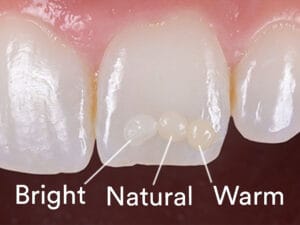
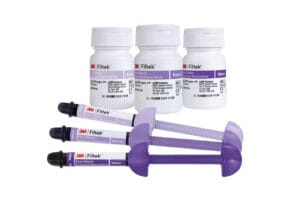 The 3M™ Filtek™ Easy Match Universal Restorative from Solventum, formerly 3M Health Care, is a particularly commendable restorative material which involves simpler shade matching. A thin application to rebuild the opacity of the enamel, using approximately 0.5-1mm of 3M™ Filtek™ Easy Match Universal Restorative, will create the perfect level of enamel translucency required. For more severe chips, where reshaping may be required, 2mm+ of material can cleverly imitate the dentine required to restore exposed pulp and fill the structure surrounding the tooth’s imperfections, without the need of a blocker. Regardless of the injury severity, the product’s naturally-adaptive versatility reduces patient’s aesthetic concerns.
Restorative dentistry is often deemed successful based on the level of aesthetic and durability achieved. Advances in modern dental materials have derived solutions that have high polish-retention while enduring everyday forces of chewing, grinding, and temperature changes. Such qualities contribute to fewer repeat visits, and the ability to allow for cost-effective treatments in the future such as crowns or veneers. Lasting strength and adaptability with great aesthetic are imperative for effective restorative care.

To learn more about Solventum, please visit https://www.solventum.com/en-gb/home/oral-care/
For more updates on trends, information and events follow us on Instagram at @solventumdentalUK and @solventumorthodonticsemea
©Solventum 2024. Solventum, the S logo and Filtek are trademarks of Solventum and its affiliates. 3M is a trademark of 3M company.
About Solventum
Solventum, enabling better, smarter, safer healthcare to improve lives. As a new company with a long legacy of creating breakthrough solutions for our customers’ toughest challenges, we pioneer game-changing innovations at the intersection of health, material and data science that change patients’ lives for the better while enabling healthcare professionals to perform at their best. Because people, and their wellbeing, are at the heart of every scientific advancement we pursue. We partner closely with the brightest minds in healthcare to ensure that every solution we create melds the latest technology with compassion and empathy. Because at Solventum, we never stop solving for you.
[i] Lam, R. (2016). “Epidemiology and outcomes of traumatic dental injuries: a review of the literature.” Australian Dental Journal, 61, 4–20
[ii] McDonald, R. E., et al. (2011). Dentistry for the Child and Adolescent. 9th Edition
[iii] Young, E. J., Macias, C. R., & Stephens, L. (2015). Common Dental Injury Management in Athletes. Sports health, 7(3), 250–255. https://doi.org/10.1177/1941738113486077
[iv] Maestrello, C. L., Mourino, A. P., & Farrington, F. H. (1999). Dentists’ attitudes towards mouthguard protection. Pediatric dentistry, 21, 340-346
[v] Rodd, H., & Noble, F. (2019). Psychosocial Impacts Relating to Dental Injuries in Childhood: The Bigger Picture. Dentistry journal, 7(1), 23. https://doi.org/10.3390/dj7010023
[vi] Rodd, H., & Noble, F. (2019). Psychosocial Impacts Relating to Dental Injuries in Childhood: The Bigger Picture. Dentistry Journal, 7(1), 23. https://doi.org/10.3390/dj7010023
[vii] Kershaw, S., Newton, J. T., & Williams, D. M. (2008). The influence of tooth colour on the perceptions of personal characteristics among female dental patients: comparisons of unmodified, decayed and ‘whitened’ teeth. British dental journal, 204(5), E9–257.
[viii] Rodd, H., & Noble, F. (2019). Psychosocial Impacts Relating to Dental Injuries in Childhood: The Bigger Picture. Dentistry journal, 7(1), 23. https://doi.org/10.3390/dj7010023
[ix] Magne, P. (2005). “Bonded porcelain restorations in the anterior dentition: a biomimetic approach.” Quintessence Publishing