


 Author: Ross Phillips
There are many factors influencing the accessibility of dentistry for patients today. From availability of appointments to the choice of treatment options on offer and the treatment times made possible, each aspect will impact whether a patient is willing and able to proceed. Affordability is another major factor constantly affecting patient decisions surrounding dental care. While lower costs are often desired and even prioritised by individuals, they must not lead to compromised treatment quality. How does the modern dental team achieve a balance? By understanding the barriers to care and utilising cutting-edge equipment to overcome the challenges faced.
Money talks
Given the economic turbulence and rapidly increasing cost-of-living experienced in recent years, it is no surprise that cost is important for dental patients. Even back in 2021, an exploratory paper on NHS dental services found a link between increasing dental charges and reduced access to care.[i] It also highlighted that affordability of care would disproportionately affect lower income individuals and families, who would have to be the most careful with their outgoings. The Adult Oral Health Survey 2021[ii] published similar results, with 33% of participants reporting that cost impacted the type of dental treatment they chose.
All of these findings were reflected in a more recent 2024 study by the GDC,[iii] which proved that affordability remains a major concern for the general population. Almost a quarter of participants were unhappy with the cost of dentistry, with many suggesting that would allocate funds for urgent care over preventive services.
This presents a challenge for dental practices. Of course, professionals have no control over rising NHS prices, but it is important that patients are educated to understand the value of routine check-ups. To help address the issues and bridge the gap in cost – while still maintaining a viable and successful business – many practices are offering private dentistry at highly competitive costs. Either by streamlining workflows, introducing dental plans, or both, many dental providers are finding innovative ways to offer high-quality dentistry in a more affordable way.
The role of technology
This journey is only made possible with investment in new technologies. A broad range of equipment and software solutions are available today that are designed to enhance everything from diagnostics to treatment planning and execution. Not only do these afford many patients the benefit of better, more predictable outcomes in less time, but they also increase workflow efficiencies for the professional team. The result is reduced chair time and fewer clinical steps, contributing to lower operational costs and, therefore, lower patient fees.
The digital workflow has been praised for its impact in all dental disciplines, from restorative and prosthodontic dentistry to implantology and even oral health education. The literature cites digital technologies as key to successful same-day dentistry, while also increasing patient comfort and satisfaction with treatment.[iv] Enhanced safety, predictability and ease of clinical workflow has also been cited in areas like oral surgery.[v]
3D printing is an excellent example of the technology that is revolutionising dentistry around the globe. Even early adopters of the equipment have reported its implementation to increase efficiency and reduce costs.[vi] Both of these are integral to enhancing patient access to dental care, facilitating shorter treatment times, greater convenience and lower fees. This is proving especially useful within the restorative workflow.
Optimising outcomes
A limitation of many 3D printers to date in optimising the aforementioned factors has been the viscosity of the resin materials used to fabricate restorations. The thickness of traditional crown resins, for instance, will dictate the time taken to print, with implications for the accuracy of the restoration too. As such, a lower viscosity is beneficial for enhanced 3D printing outcomes when working with ceramics.[vii]

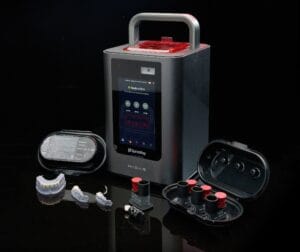
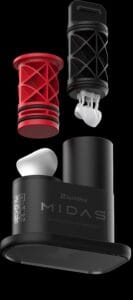
The new Midas 3D printer from SprintRay – the only provider dedicated solely to delivering comprehensive 3D printing workflows in dentistry – overcomes this challenge. The one-of-a-kind design is completely unrestricted by resin viscosity, delivering a standard of accuracy, speed and predictability so far unmatched in the field. The patented Digital Press Stereolithography (DPS) technology, combined with the specifically designed SprintRay Ceramic Crown Resin, allows dentists to 3D print crowns in just 10 minutes, with a total treatment time of an astounding 45 minutes. That’s speed, accuracy and cost-efficiency wrapped up into one innovative solution, providing reliable and highly affordable same-day dentistry for a wide range of patients.
Cost is not the most important factor in dentistry but it’s crucial that patients have access to high-quality care they can afford. Modern digital solutions, particularly 3D printers, deliver all this and more, bringing excellent dental solutions within reach of more people. If you are passionate about offering fast and affordable dentistry with no compromise in quality, you need to be utilising this technology. Not introducing it soon will see you left behind.

For more information, please visit https://sprintray.com/en-uk/
[i] Dale V, Gutacker N, Bloor K. NHS dental charges and the effect of increases on access: an exploration. University of York. The King’s Fund. March 2021. https://www.york.ac.uk/media/healthsciences/images/research/prepare/NHS%20dental%20charges%20and%20the%20effect%20of%20increases%20on%20access%20-%20an%20exploration.pdf [Accessed July 2025]
[ii] Adult oral health survey 2021: service use and barriers to accessing care. Office for Health Improvement & Disparities. Published January 2024. https://www.gov.uk/government/statistics/adult-oral-health-survey-2021/adult-oral-health-survey-2021-service-use-and-barriers-to-accessing-care [Accessed July 2025]
[iii] GDC published new research on the public’s experiences of dentistry. GDC. August 2024. https://www.gdc-uk.org/news-blogs/news/detail/2024/08/01/gdc-publishes-new-research-on-the-public-s-experiences-of-dentistry [Accessed July 2025]
[iv] Abdulkarim LI, Alharamlah FSS, Abubshait RM, Alotaibi DA, Abouonq AO. Impact of Digital Workflow Integration on Fixed Prosthodontics: A Review of Advances and Clinical Outcomes. Cureus. 2024 Oct 24;16(10):e72286. doi: 10.7759/cureus.72286. PMID: 39583534; PMCID: PMC11585284.
[v] da Silva Salomão GV, Chun EP, Panegaci RDS, Santos FT. Analysis of Digital Workflow in Implantology. Case Rep Dent. 2021 Feb 15;2021:6655908. doi: 10.1155/2021/6655908. PMID: 33628525; PMCID: PMC7899756.
[vi] Revilla-León, Marta & Frazier, Kevin & Costa, Juliana & Haraszthy, Violet & Ioannidou, Effie & MacDonnell, William & Park, Jacob & Tenuta, Livia & Eldridge, Laura & Vinh, Rashad & Kumar, Purnima. (2023). Prevalence and applications of 3-dimensional printers in dental practice. An American Dental Association Clinical Evaluators Panel survey:. Journal of the American Dental Association (1939). 154. 355-356e.2. 10.1016/j.adaj.2023.02.004.
[vii] Ligon SC, Liska R, Stampfl J, Gurr M, Mülhaupt R. Polymers for 3D Printing and Customized Additive Manufacturing. Chem Rev. 2017 Aug 9;117(15):10212-10290. doi: 10.1021/acs.chemrev.7b00074. Epub 2017 Jul 30. PMID: 28756658; PMCID: PMC5553103.