

Dr Balaji presents a complex case in which soft tissue augmentation was undertaken to address severe gingival recession in the UR quadrant in which the key aims were to restore aesthetics and reduce sensitivity whilst ensuring a long-lasting solution.
Patient presentation and assessment
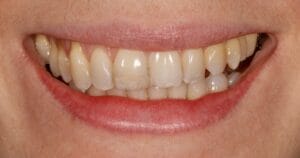
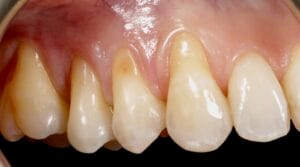
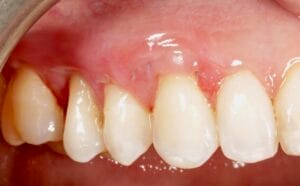
A 34-year-old woman presented to the practice for treatment. The patient had severe gingival recession in all areas of the mouth and a very thin gingival biotype. The UR3-6 were showing a large amount of the roots and causing root resorption too. Her primary concern was the aesthetic appearance of her teeth, though she wanted to address the sensitivity she was experiencing and was keen to achieve a long-term and durable treatment result for her natural teeth.
Treatment planning
To treat the severe gingival recession, it was important to discuss all available treatment options, including the possibility of doing nothing. The option of orthodontic treatment (which the patient had already undergone previously) was discussed, which the patient declined. However, she wanted to improve the appearance of the soft tissue. Due to the thin gingival biotype, it was important to consider soft tissue augmentation in order to produce a stable functional and aesthetic outcome.
As such, the patient consented to gingival grafts to cover the recession and restore gingival thickness in the mouth. It was agreed that the UR quadrant would be treated as a starting point, meaning that the area with the most severe recession (UR3-6) would receive treatment first.
Treatment provision
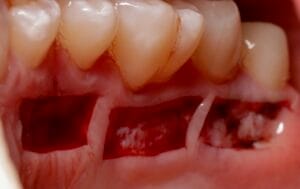
Recession coverage was performed for multiple teeth, as planned. To begin, local anaesthesia was administered to numb the area and a mucogingival split thickness flap designed for multiple teeth was raised. Gingival planing was then undertaken using EDTA and amelogenin.
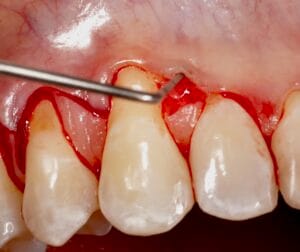
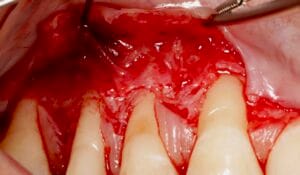
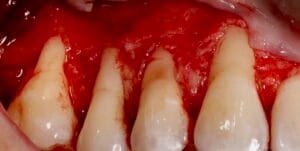
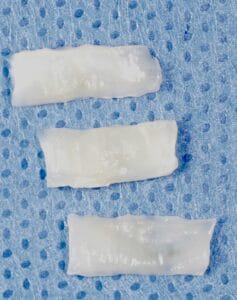
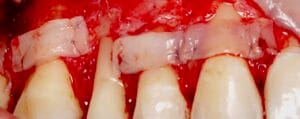
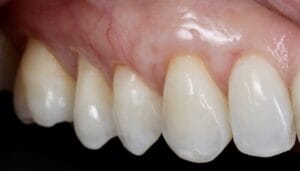
Three connective tissue grafts were harvested from the palate, which were de-epithelialized and sutured onto the root surfaces of the UR3,4, and 6. Connective tissue grafts offer the benefits of aesthetics as well as offering effective outcomes. This technique ensures the gingivae are restored to optimal height whilst providing an excellent colour match – addressing the patients key concerns in this case.
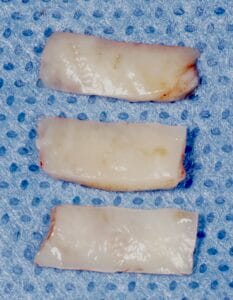
Once stabilised, the buccal flap was advanced tension-free to cover the roots. The connective tissue donor sites were covered to protect them from infection and promote healing. The patient was then provided with post operative instructions to minimise the risks of complications and encourage a smooth healing journey.
Reflection
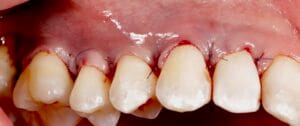
On reflection, the treatment was successful. Follow up photos show an excellent aesthetic outcome and good root coverage. Currently, we are planning to treat the UL region too. The patient is very happy with the outcome.
Dr Balaji provides industry-leading training courses on both hard and soft tissue management around dental implants with the ASHA Club.
For more information about how you could elevate your skills with the support of experts, please visit www.ashaclub.co.uk or call 07974 304269
 Author bio: Dr Selvaraj Balaji: BDS, MFDS RCPS(Gla), MFD SRCS(Ed), LDS RCS(Eng)
Since he obtained the BDS Degree, Dr Balaji has worked in Maxillo-facial units in the UK for several years and gained substantial experience in surgical dentistry. He is the principal dentist of The Gallery Dental Group which is made up of Meadow Walk Dental Practice and The Gallery Dental & Implant Centre. Dr Balaji is also the founder of the Academy of Soft and Hard Tissue Augmentation (ASHA) and runs courses, lectures and study clubs in the UK and around Europe for aspiring implantologists.