

Providing effective, non-invasive restorations to the dentition is the dental professional’s bread and butter. This includes inlays and onlays, a restorative choice for patients that is more conservative than a crown, but suits teeth that are heavily damaged by caries.
As time has passed, dentistry has increasingly leaned towards providing non-invasive care. This means that where appropriate, a dental crown should be avoided if an inlay/onlay would suffice.
We have also witnessed the development of new materials and dental technologies, changing the capabilities for indirect restorations. Understanding how to optimise these solutions through modern workflows is key, and helps clinicians understand when an inlay can be effective.
A good impression
An indirect restoration, such as a dental inlay/onlay, involves the fabrication of a restorative element outside of the oral cavity, using a physical or digital impression as a reference.[i] This approach offers mechanical advantages over direct resin composites, including the avoidance of polymerisation shrinkage, the ability to conform to the ideal occlusal morphology, and improved wear compatibility with the opposing natural dentition.i However, this is more time consuming – the restoration must be accurate and effective to make up for the increased cost and treatment duration.
It all begins with the impression of the prepared tooth. If inaccurate, the inlay will not be designed for the correct space – expect an unsuccessful restoration, and the need to extend treatment time and restart the process.
The literature has examined the use of both digital and conventional impressions in recent years. Some studies in the literature feel that digital impression techniques can simplify and speed up the workflow (for those familiar with the technology), whilst improving patient comfort, and delivering high-quality restorations.[ii] However, conventional impression materials are still seen as a high-quality solution that is preferred in some treatment instances.[iii] Clinicians should secure the greatest possible outcomes by using techniques that they are familiar with, as control over the impression will have a significant influence on the outcome.
Material matters
An inlay can be produced with a wide array of restorative materials. The clinical team should choose one based on functional, aesthetic and oral health needs. Appearance is key; patients are increasingly desiring restorations that are aesthetic and blend in with the existing dentition, even for posterior solutions.i
When choosing materials for inlays/onlays, however, strength is non-negotiable. The restoration is on the occlusal surface of the tooth, and must not be susceptible to the forces caused by chewing, biting and swallowing.
Ceramic inlays have been recognised to have good survival rates in line with other restorations made with the material, and displayed a 1% annual failure rate in 15 years of observation, according to a 2016 study.[iv] A systematic review published in the same year observed similar survival rates and performance for glass-ceramics and feldspathic porcelain.[v]
The use of composite resin has been fairly successful too. Studies have shown a cumulative survival rate of inlays, onlays and overlays of 91% over five years. The biggest reasons for failure of composite resin solutions were primarily biological, including secondary caries and endodontic complications. This differs from the ceramic restorations assessed in the same study, which principally failed due to mechanical complications.[vi]
Other studies have identified fractures as the most frequent failure type for composite restorations, however,[vii] so they are far from immune.
Clinicians can assess their own favoured materials for use, but a greater number of options available means that there is a solution for every patient.
Sticky situation
Another essential material aspect of the dental inlay is the use of an effective adhesive resin cement to secure the material in the long-term. Clinicians will need to consider that an inlay/onlay may need to adhere to both enamel and dentine, so appropriate adhesion is imperative.
 There is also the consideration of the luting cement in a conventional or self-adhesive workflow. Self-adhesive solutions are favourable to dentists due to their ease of use and reduced treatment time, but the quality of bonding to dental structures and the inlay/onlay material should still be prioritised.[viii]
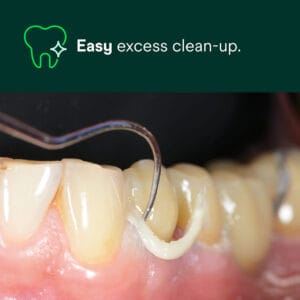
With studies showing that survival rates are heavily influenced by the choice of cement and adhesive system, clinicians should never settle for second best.vii The 3M™ RelyX™ Universal Resin Cement from Solventum, formerly 3M Health Care, is an award-winning* solution that features universal dual-cure capabilities for virtually all adhesive and self-adhesive resin cement indications. It utilises an outstanding self-adhesive bond strength, including to dentine, to support streamlined workflows, and can be paired with the 3M™ Scotchbond™ Universal Plus Adhesive from Solventum for an enhanced bond strength to all substrates.


The next time that clinicians consider a conservative restoration, and opt for an inlay/onlay, there will be much to consider. With an optimised impression, as well as materials and adhesives that can be relied upon in a variety of situations, dental professionals will ensure patients receive high-quality care that lasts for years to come.
To learn more about Solventum, please visit https://www.solventum.com/en-gb/home/oral-care/
For more updates on trends, information and events follow us on Instagram at @solventumdentalUK and @solventumorthodonticsemea
©Solventum 2024. Solventum, the S logo and RelyX are trademarks of Solventum and its affiliates. 3M and Scotchbond are trademarks of 3M company.
*Dental Advisor Award 2025, Top Product Awards, https://dentaladvisor.com/clinical-evaluation/3m-relyx-universal-resin-cement/#cu-tabs|3
About Solventum
Solventum, enabling better, smarter, safer healthcare to improve lives. As a new company with a long legacy of creating breakthrough solutions for our customers’ toughest challenges, we pioneer game-changing innovations at the intersection of health, material and data science that change patients’ lives for the better while enabling healthcare professionals to perform at their best. Because people, and their wellbeing, are at the heart of every scientific advancement we pursue. We partner closely with the brightest minds in healthcare to ensure that every solution we create melds the latest technology with compassion and empathy. Because at Solventum, we never stop solving for you.
[i] Angeletaki, F., Gkogkos, A., Papazoglou, E., & Kloukos, D. (2016). Direct versus indirect inlay/onlay composite restorations in posterior teeth. A systematic review and meta-analysis. Journal of dentistry, 53, 12-21.
[ii] Vargas-Corral, F. G., Vargas-Corral, A. E., Rodríguez-Valverde, M. A., Bravo, M., & Rosales-Leal, J. I. (2024). Clinical comparison of marginal fit of ceramic inlays between digital and conventional impressions. The Journal of Advanced Prosthodontics, 16(1), 57.
[iii] Albanchez-Gonzalez, M. I., Brinkmann, J. C. B., Pelaez-Rico, J., Lopez-Suarez, C., Rodriguez-Alonso, V., & Suarez-Garcia, M. J. (2022). Accuracy of digital dental implants impression taking with intraoral scanners compared with conventional impression techniques: A systematic review of in vitro studies. International Journal of Environmental Research and Public Health, 19(4), 2026.
[iv] Collares, K., Corrêa, M. B., Laske, M., Kramer, E., Reiss, B., Moraes, R. R., … & Opdam, N. J. (2016). A practice-based research network on the survival of ceramic inlay/onlay restorations. Dental Materials, 32(5), 687-694.
[v] Morimoto, S., Rebello de Sampaio, F. B. W., Braga, M. M., Sesma, N., & Özcan, M. (2016). Survival rate of resin and ceramic inlays, onlays, and overlays: a systematic review and meta-analysis. Journal of dental research, 95(9), 985-994.
[vi] Fan, J., Xu, Y., Si, L., Li, X., Fu, B., & Hannig, M. (2021). Long-term clinical performance of composite resin or ceramic inlays, onlays, and overlays: a systematic review and meta-analysis. Operative Dentistry, 46(1), 25-44.
[vii] Petrescu, E. L., Negruţiu, M. L., Sinescu, C., Romînu, M., Pop, D. M., Abdi, H. B., … & Manole, M. (2024). Clinical assessement of ceramic inlays compared to resin composite inlays-literature review. Medicine in Evolution, 30(3), 494-502.
[viii] Salaverry, A., Borges, G. A., Mota, E. G., Júnior, L. H. B., & Spohr, A. M. (2013). Effect of resin cements and aging on cuspal deflection and fracture resistance of teeth restored with composite resin inlays. Journal of Adhesive Dentistry.