



How often do you get a perfect night of sleep? According to a survey, only 6% of Brits awake feeling refreshed. For those that don’t, discomfort and pain rank among the top reasons for fragmented sleeping.[i] Insufficient sleep impacts every aspect of the following day; humans require rest like a phone requires charge – without it we are incapable of functioning at our best level.
Temporomandibular joint disorder (TMD) has a high prevalence, affecting up to 25% of the general population.[ii] Associated with chronic pain, headaches, mastication difficulties and jaw stiffness, TMD symptoms impact daily life, including sleep quality.[iii] Without consistent rest, physical health, emotional wellbeing, brain function and daytime performance all take a heavy toll, which is why dental practitioners must help at-risk patients with managing TMD and getting the sleep they need.
A reciprocating relationship
88% of patients with chronic pain report sleep problems, and more than 40% of patients with sleep problems report chronic pain.ii The relationship between the two is apparent, with both maintaining or worsening the symptoms of the other. Among TMD patients, 90% are likely to experience poor sleep quality, with older demographics, women and those with numerous TMD diagnoses at a greater risk.ii

The reciprocating relationship between poor sleep and TMD creates a vicious cycle that can be hard to break. If intense pain of the temporomandibular joint (TMJ) prevents patients from sleeping comfortably and consistently, then each following day is inhibited by a lack of energy, impacting productivity and heightening the risk of an accident. Fatigue of the mind can increase stress and anxiety, potentially leading to bruxism,[iv] whilst fatigue of the body is marked by repeated yawning – an action that mobilises the jaw to open as wide as possible. In both cases of fatigue, a tired patient is likely to worsen TMD symptoms.
Getting some shut eye
The vicious cycle can be challenged by promoting healthier sleeping habits among TMD patients. In the UK, 54% of people spend the recommended 7-8 hours in bed, but only 34% spend it asleep.[v] Interrupted rest can be attributed to a variety of factors, from watching TV or going on social media right before going to sleep, to chronic pain or sharing a bed with a snoring partner. TMD patients should therefore be encouraged to take healthier measures for a better night sleep, such as:
- Breathing exercises before bed
- Limiting screen time
- Setting regular sleeping patterns and set bed times – though this can be more difficult for shift workers
- Creating a peaceful sleeping environment (a dark room, silence etc.)[vi]
A more recent trend has been ‘sleep divorce’, in which partners sleep in separate beds for nights that aren’t disturbed my snoring or duvet stealing. Such measures can increase the amount of deep sleep achieved per night. This is the important state in which energy is replenished, memories are stored, growth and repair occur and the immune system is strengthened.[vii] As such, deep sleep is vital for physical and mental wellbeing, with the risk of complications like heart disease and depression increasing among patients with a sleep disorder.[viii]

A drowsy diet
 Dental practitioners can further educate at-risk patients on the relationship between diet and sleep. A diet filled with milk products, fish, fruit and vegetables should be encouraged for optimal sleep-promoting effects.[ix] Moreover, a healthy diet matched by regular exercise can reduce high levels of the stress hormone cortisol, improving sleep and reducing sleep bruxism.[x]
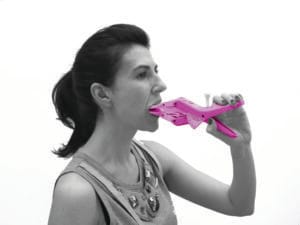
Whilst maintaining a consistent sleeping pattern of quality rest can prevent TMD symptoms from worsening, this should be done in tandem with rehabilitation exercises for an optimal outcome. The OraStretch® Press Rehab System from Total TMJ is an ideal solution for at-home physical therapy. Easy to use thanks to its simple yet effective design, it stretches the jaw and orofacial muscles to restore function and flexibility to the TMJ. Diligent use of the OraStretch® Press can reduce TMD symptoms for a life less impaired by chronic pain and sleepless nights.
Irregular or insufficient sleep reduces quality of life and can lead to adverse health conditions. Its close association with TMD demands closer attention so that their comorbidity can be challenged and long-term solutions can be found for an enhanced quality of life.

For more details about Total TMJ and the products available, please email info@totaltmj.co.uk

Author: Karen Harnott – TotalTMJ Operations Director
[i] The Sleep Matters Club. (2024). The 2024 UK Sleep Survey | Sleep Matters Club. [online] Available at: https://www.dreams.co.uk/sleep-matters-club/sleep-survey-2024.
[ii] Lee, Y.-H., Auh, Q-Schick., An, J.-S. and Kim, T. (2022). Poorer sleep quality in patients with chronic temporomandibular disorders compared to healthy controls. BMC Musculoskeletal Disorders, 23(1). doi:https://doi.org/10.1186/s12891-022-05195-y.
[iii] NIH (2023). TMD (Temporomandibular Disorders). [online] www.nidcr.nih.gov. Available at: https://www.nidcr.nih.gov/health-info/tmd.
[iv] Chemelo, V. dos S., Né, Y.G. de S., Frazão, D.R., Souza-Rodrigues, R.D. de, Fagundes, N.C.F., Magno, M.B., Silva, C.M.T. da, Maia, L.C. and Lima, R.R. (2020). Is There Association Between Stress and Bruxism? A Systematic Review and Meta-Analysis. Frontiers in Neurology, 11(11). doi:https://doi.org/10.3389/fneur.2020.590779.
[v] The Sleep Matters Club. (2024). The 2024 UK Sleep Survey | Sleep Matters Club. [online] Available at: https://www.dreams.co.uk/sleep-matters-club/sleep-survey-2024.
[vi] NHS (2021). How to fall asleep faster and sleep better – Every Mind Matters. [online] nhs.uk. Available at: https://www.nhs.uk/every-mind-matters/mental-wellbeing-tips/how-to-fall-asleep-faster-and-sleep-better/.
[vii] Marcin, A. (2018). What Is Deep Sleep and Why Is It Important? [online] Healthline. Available at: https://www.healthline.com/health/deep-sleep#sleepstages.
[viii] Rigon, M., Obara, K., Paixão, L., Cardoso, J.R. and Junior (2024). Relationship between temporomandibular disorders and sleep disorders in adults: An overview of systematic reviews. Sleep Medicine, 124, pp.404–415. doi:https://doi.org/10.1016/j.sleep.2024.10.002.
[ix] St-Onge, M.-P., Mikic, A. and Pietrolungo, C.E. (2016). Effects of Diet on Sleep Quality. Advances in Nutrition, [online] 7(5), pp.938–949. doi:https://doi.org/10.3945/an.116.012336.
[x] Davidson, K. (2017). 11 Natural Ways to Lower Your Cortisol Levels. [online] Healthline. Available at: https://www.healthline.com/nutrition/ways-to-lower-cortisol.