


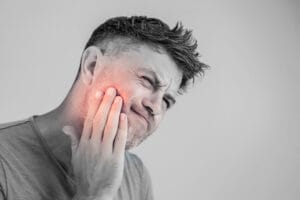
Delivering dental care during an emergency appointment often requires quick, precise decisions under pressure to relieve patients’ symptoms while minimising the risk of complications. Emergency patients may be distressed, anxious, and in pain. Dentists have to be ready for anything, including a possible medical emergency, or management of their own personal risk.
Under such challenging circumstances, upholding the core principles for providing effective urgent dental care can be difficult. The heightened pressure of emergency dental appointments has been linked to inadequate documentation of diagnoses or treatment plans, which can jeopardise ongoing patient care and expose clinicians to medico-legal risks. Common reasons for treatment failure include patients delaying seeking treatment after an injury, patients not attending follow-up appointments and the inadequate protection of dentine exposed by dental trauma or infection.[i]
A well-prepared, methodical approach is essential to mitigate these risks. This includes clear communication with patients and other professionals for effective ongoing care, accurate documentation, and addressing the causes of problems where possible rather than simply treating symptoms.i
Who is most commonly in need of urgent dental treatment?
The most common presenting complaint is pain, arising from biological causes such as infection, or from a traumatic dental injury (TDI). Most requiring an urgent appointment can be treated safely within a normal clinical setting. Of those cases referred to hospital for emergency treatment, an overwhelming majority (85%) have a diagnosis of dental infection with diseases of the pulp and periapical tissue.[ii]
Emergency dental patients are often young adults aged 19–29, and those with a low socioeconomic status.i Those who delay seeking routine care – such as people experiencing homelessness or those in rural or deprived areas – are more likely to require urgent services. Anxiety plays a significant role, with one study reporting that 43% of patients seeking emergency care delayed treatment due to fear of the dentist.i
Other common emergencies include complications like post-extraction bleeding or alveolar osteitis.ii TDIs account for 15.4% of emergency visits, with 24% of these patients under 21 years old.[iii] Common causes of TDIs are falls, sporting accidents, road traffic accidents and violence.[iv]
The right approach
While a definitive approach to treatment in urgent cases is advised,i in some urgent cases, addressing the root cause of the issue may not be immediately possible. For example, 22% of facial trauma cases are linked to alcohol consumption.[v] Intoxication may impair the consent process as well as patient behaviour, presenting an unacceptable risk to clinicians. It will be difficult to take an accurate medical history, and depending on the intoxicant, there may be contraindications that are difficult to assess, especially if a patient is unwilling or unable to disclose the use of controlled substances. In such cases, symptom management may be the only option.[vi]
However, where possible and appropriate, clinicians are advised to deliver the most definitive care possible. Among the many important features of excellent urgent care is the provision of appropriate materials and equipment to prevent future complications.[vii]
Protecting exposed dentine
 In the case of an infectious dental emergency, the priority for the clinician is to treat the infection, completely removing it to avoid potentially life-threatening complications. This may entail emergency root canal treatment (RCT), and in severe cases may require extraction. In cases where RCT is indicated, complete removal of the infection combined with effective cleaning and obturation is essential. Where fracture is identified, the priority for the clinician, after managing pain, is to ensure exposed dentine is fully protected with the appropriate material, and that the pulp is not compromised.ii
COLTENE provides a comprehensive range of emergency restorative materials to aid in the quick, safe and effective delivery of urgent dental care. For example, Coltosol F is a temporary filling material, which is self-curing, requires no mixing and is easy to remove. It contains zinc oxide and fluoride, and has a high marginal seal due to a slight expansion on drying to ensure temporary fillings and root canal sealings are completely safe after an emergency appointment.
A strategic approach to urgent care preparedness includes methodical and well-recorded communication. Wherever possible, a definitive approach to treatment within urgent appointments is advised. The use of the right materials and techniques is essential to mitigate against risk, and deliver the best possible treatment under pressure.i


For more information, visit https://colteneuk.com/coltosol-temporary-material, email info.uk@coltene.com or call 0800 254 5115.
 Nicolas Coomber: COLTENE National Account &Marketing Manager
[i] Urgent dental care Evidence review. Public Health England. 2019. Available at: https://assets.publishing.service.gov.uk/media/5c9e1a1140f0b633f7198ac4/urgent_dental_care_evidence_review.pdf Accessed December 2024
[ii] Garispe A, Sorensen C, Sorensen JR. Dental Emergencies. [Updated 2022 Dec 7]. In: StatPearls [Internet]. Treasure Island (FL): StatPearls Publishing; 2024 Jan-. Available from: https://www.ncbi.nlm.nih.gov/books/NBK589664/ Accessed December 2024
[iii] Lima TCDS, Coste SC, Fernandes MIAP, Barbato-Ferreira DA, Colosimo EA, Del Fabbro M, Ribeiro Sobrinho AP, Côrtes MIS, Bastos JV. Prevalence of traumatic dental injuries in emergency dental services: A systematic review and meta-analysis. Community Dent Oral Epidemiol. 2023 Apr;51(2):247-255. doi: 10.1111/cdoe.12733. Epub 2022 Feb 14. PMID: 35165912.
[iv] Idowu AE, Adedapo AO, Akhiwu BI, Agbara R, Olaniyi TO, Alufohai OO. Causes of Dental Trauma: Results of Findings Among Patients in a Secondary Oral Healthcare Center, Jos, Nigeria. J West Afr Coll Surg. 2021 Apr-Jun;11(2):19-24. doi: 10.4103/jwas.jwas_40_22. Epub 2022 Jul 12. PMID: 35983254; PMCID: PMC9380786.
[v] Hutchison IL, Magennis P, Shepherd JP, Brown AE. The BAOMS United Kingdom survey of facial injuries part 1: aetiology and the association with alcohol consumption. British Association of Oral and Maxillofacial Surgeons. Br J Oral Maxillofac Surg. 1998 Feb;36(1):3-13. doi: 10.1016/s0266-4356(98)90739-2. PMID: 9578248.
[vi] Dentistry and the Chemically Impaired Patient. TDIC Liability Lifeline – Volume 4, 2022. Available at: https://issuu.com/tdicinsurance/docs/tdicrm_liability_lifeline_2022_volume_4_final/s/17731041 Accessed November 2024
[vii] Moule, A. and Cohenca, N. (2016), Emergency assessment and treatment planning for traumatic dental injuries. Aust Dent J, 61: 21-38. https://doi.org/10.1111/adj.12396